

The State Department has finally released a sensitive file about a $3.3 million democracy promotion project targeting Cuba.
I received the heavily redacted documents, with fresh UNCLASSIFIED stamps, earlier today after a staggering 14-year, 8-month, and 15-day wait.
I filed a Freedom of Information Act request about Freedom House operations in Cuba on October 8, 2011. The 53-page file describes a program called “Strategic Initiatives for Democracy in Cuba,” or SIDC, a secretly executed but overtly funded program.
SIDC’s goals included empowering Cuban citizens, civic leaders, marginalized youth, and pro-democracy groups to challenge the status quo, prepare for transition scenarios, and build institutional capacity.
Why it matters now
The documents capture an operational window spanning 2005 to 2007, but remain relevant even today for foreign policy analysts and historians.
The SIDC project explicitly targeted what Freedom House labeled “Track II” actors—the underground youth culture, marginalized communities, and independent artists who operated outside state-sanctioned channels. In 2005, Washington viewed this as an experimental way to bypass traditional political dissidents who were easily tracked and neutralized by Cuban state security.
Today, we know that this early hypothesis was prophetic. The strategies outlined in these mid-2000s documents—using independent hip-hop music, underground art exhibitions, digital flash drives, and decentralized cultural networks—became the precise blueprints that some activists used against the socialist government in the later years.
The historical context: The shadow of Fidel Castro’s exit
To understand the urgency of unredacted portions of the text, one must travel back to the mid-2000s. The George W. Bush administration had aggressively prioritized global democracy promotion, creating the Commission for Assistance to a Free Cuba to actively engineer a post-communist transition on the island.
Then, the unexpected happened. In July 2006, Fidel Castro suffered an emergency intestinal crisis, temporarily ceding executive control to his brother, Raúl.
As Freedom House explicitly noted in its May 2007 supplemental request, the project was forced to operate in the volatile context of continued uncertainty regarding Fidel Castro’s health. Believing the regime about to collapse, Freedom House petitioned the State Department’s Bureau for Democracy, Human Rights, and Labor for an extension, scaling the total project cost up from an initial $1.7 million to $3,295,000 to maximize pressure on the island.
Inside the Freedom House plan
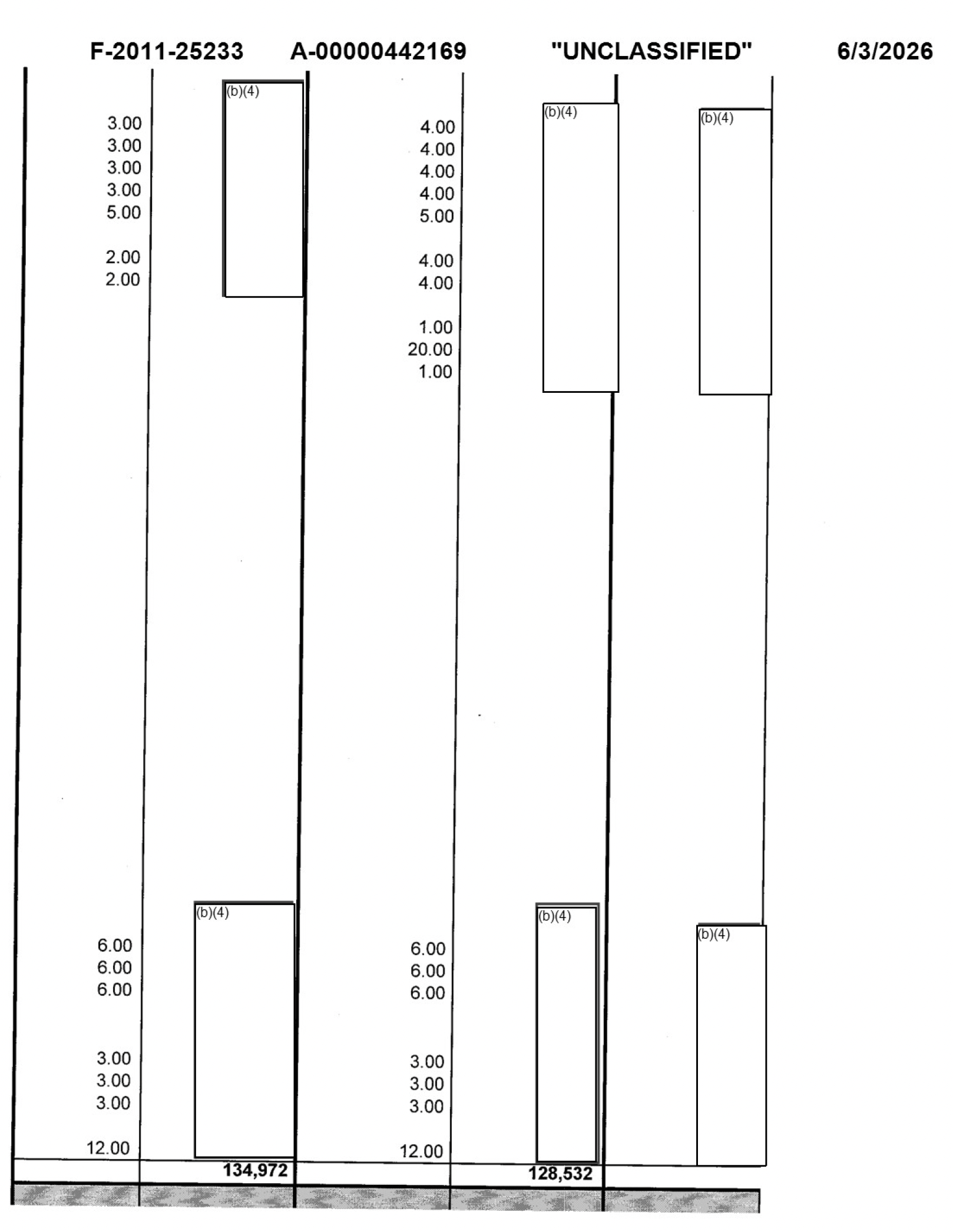
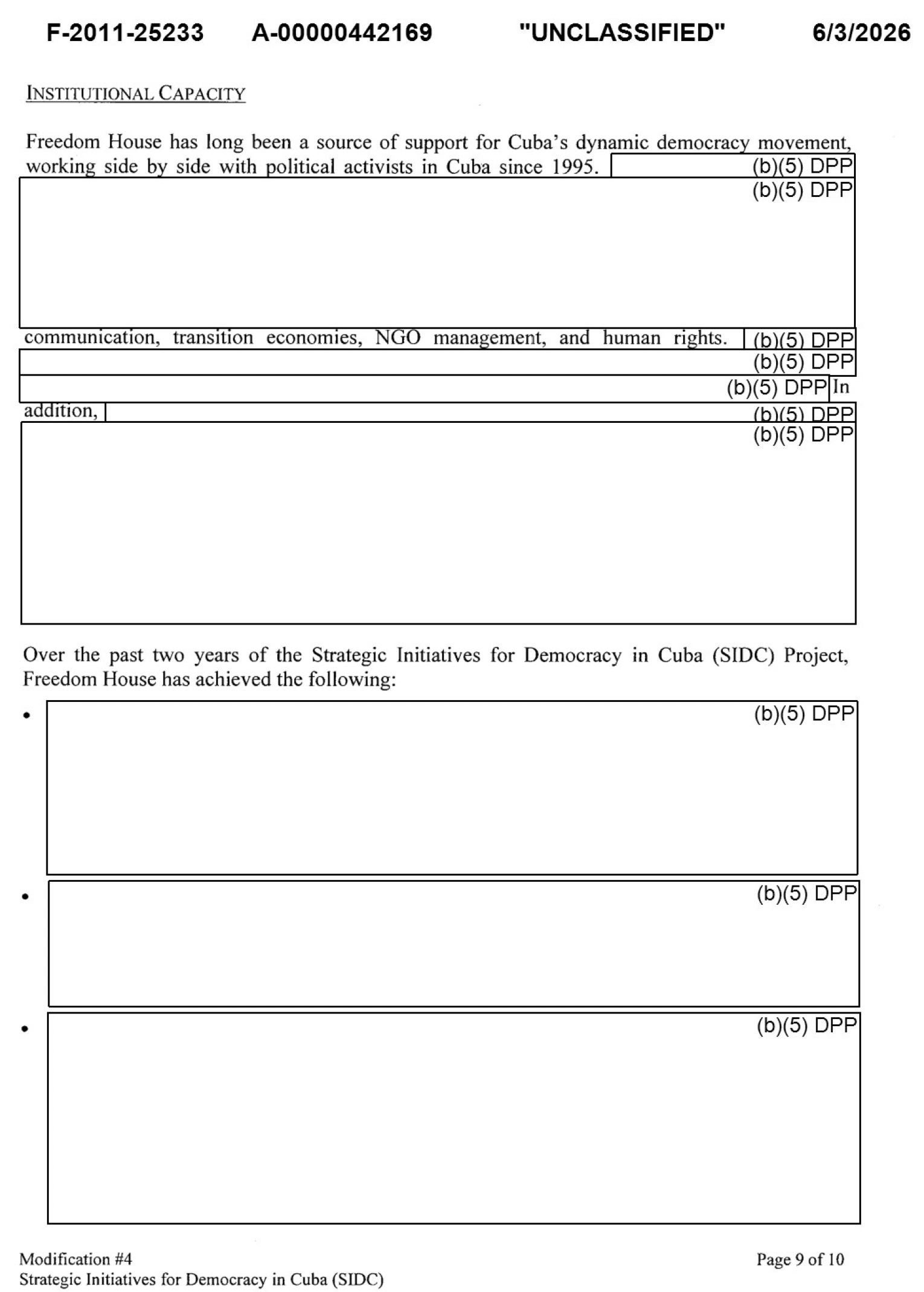
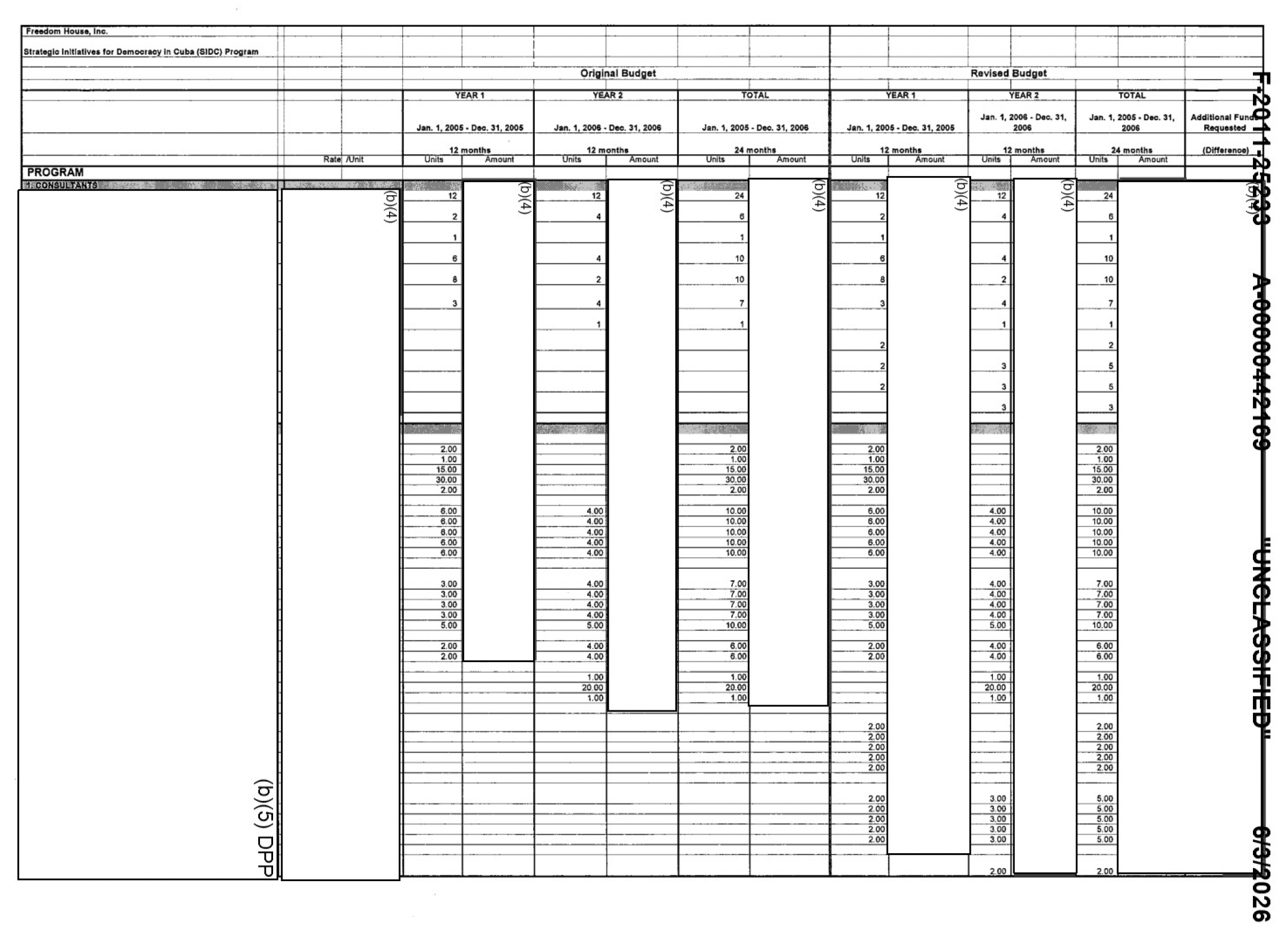
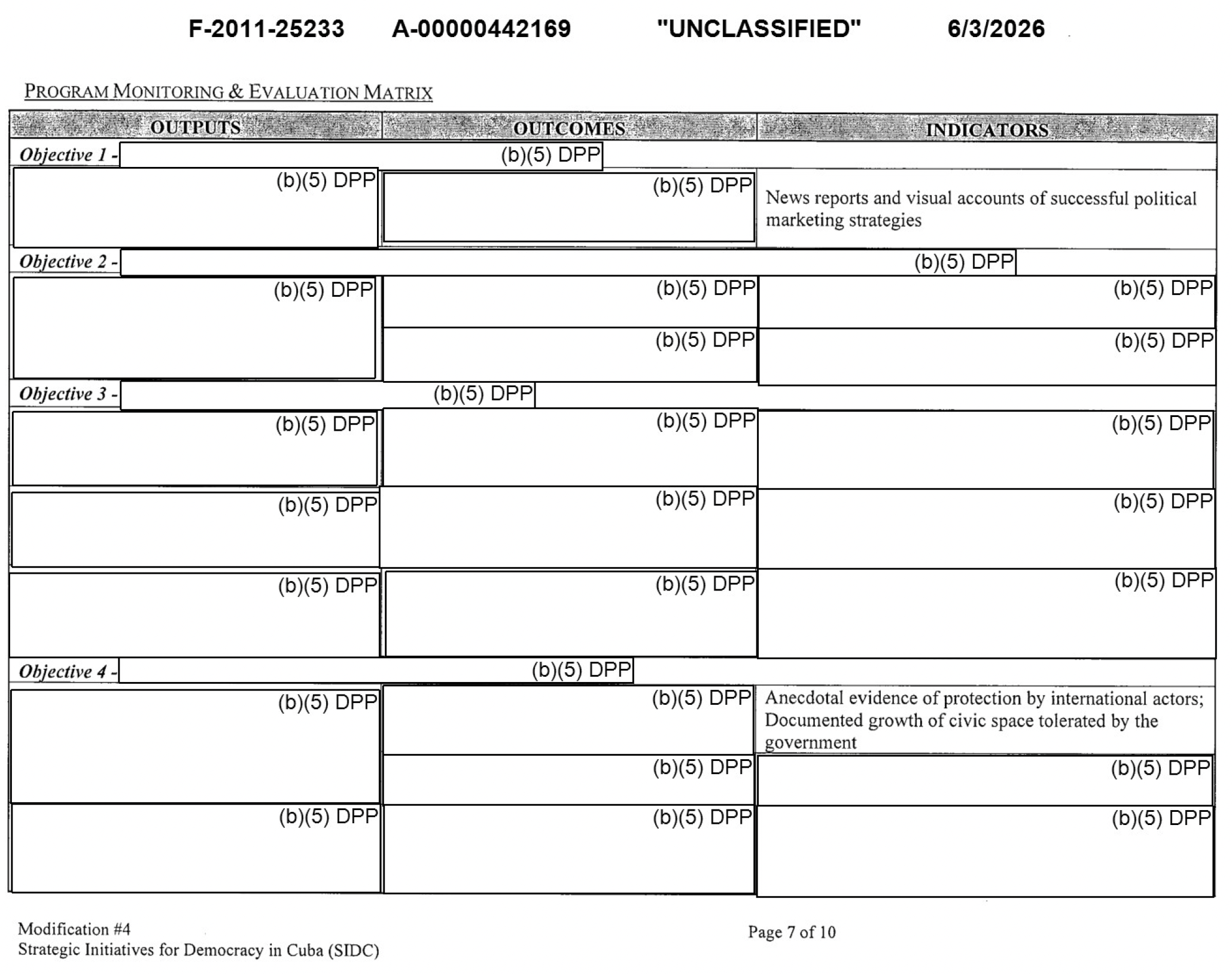
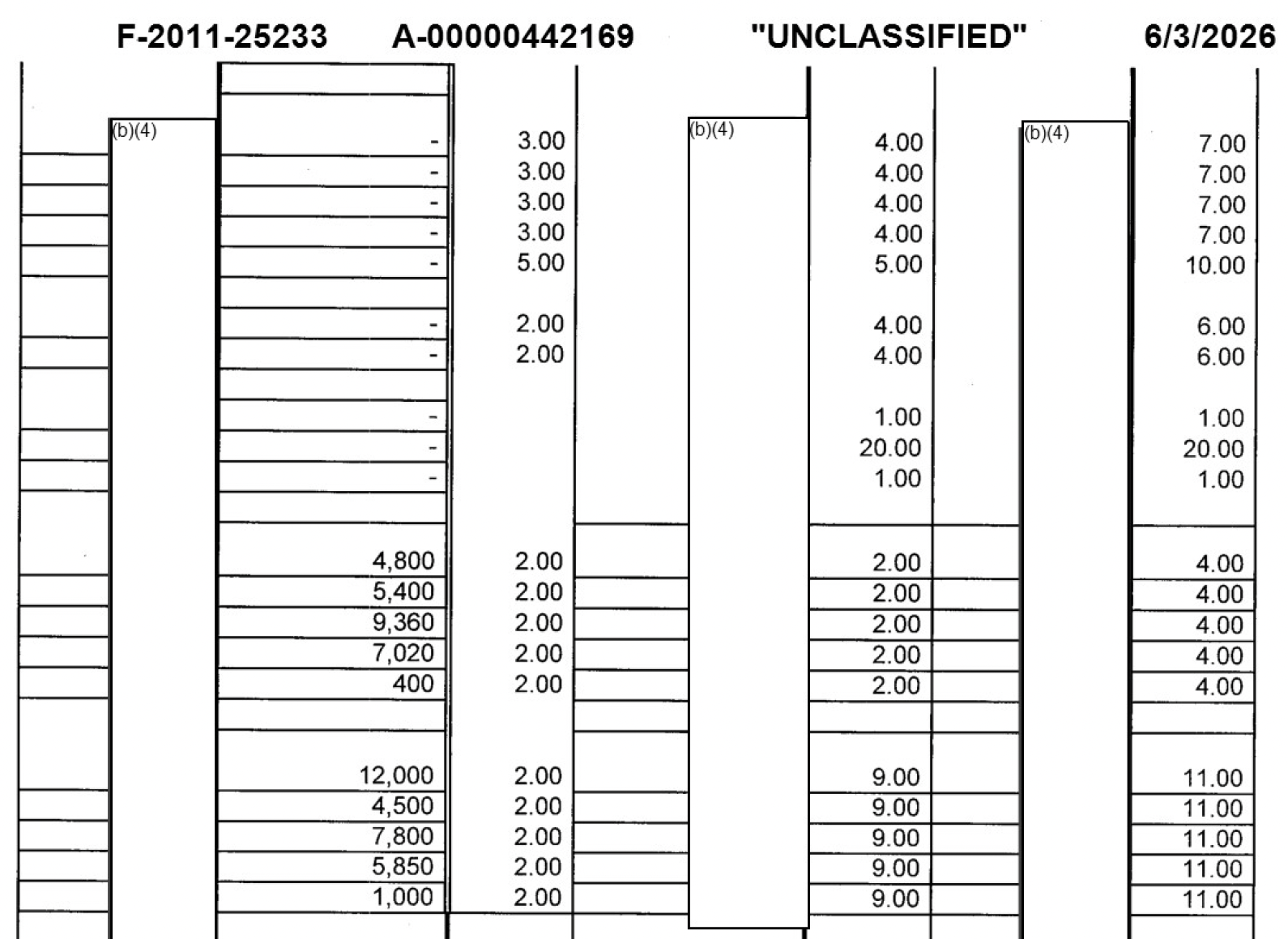
Despite the heavy redactions applied under Executive Order 13526, the document gives some details about how Freedom House spent American tax dollars.
Track I: The post-Communist mentor network
Freedom House recognized that local Cuban dissident groups were deeply fragmented and isolated by state surveillance. To bridge this gap, Track I systematically paired local Cuban civic leaders with veteran democracy advocates from Eastern Europe who had successfully navigated their own nations’ transitions away from Soviet-bloc authoritarianism.
These international mentors trained Cuban counterparts in transition scenario planning, public relations campaigns, and strategic non-violent mobilization tactics. This track was supported by face-to-face monitoring visits and a continuous pool of humanitarian small grants to sustain activists on the island.
Track II: Weaponizing the counterculture
Track II focused on the generation of Cubans born entirely after the revolution—a demographic the documents highlight as harboring a deep, unspoken yearn for economic and social mobility. Freedom House funneled special initiatives small grants to secure audio-visual gear, laptops, and recording components to technically empower underground youth musicians and independent artists. By fueling unsanctioned private concerts and alternative media productions, the grant aimed to bridge fragmented youth subcultures into a unified cultural front capable of naturally challenging state controls.
The European solidarity strategy
Realizing that direct unilateral intervention from Washington carried a heavy imperialist stigma, Freedom House funneled direct subgrants to two newly established NGOs located in Spain and Germany. These specific European partners—whose full legal names remain redacted—were tasked with running external solidarity campaigns. They explicitly targeted European tourists and international travelers visiting Cuba, attempting to break down the insulated vacation bubble and build international diplomatic pressure against the Castro regime.
The permanent shadow: The cost of soft power
Ultimately, the documents serve as a striking case study in the paradoxes of American foreign policy. While the unredacted text showcases high institutional capacity and tactical agility, the historical record proves that the SIDC project failed its primary objective: the Cuban communist state successfully navigated the executive transition from Fidel to Raúl Castro completely uninterrupted.
The documents also expose a vulnerability that the Cuban government has weaponized for decades. By laying out multi-million dollar ledgers dedicated to funding independent musicians and artists, the State Department handed Havana the perfect propaganda weapon to paint local counter-cultural movements not as organic expressions of local frustration, but as manufactured, covert operations bought and paid for by Washington.
A Q&A with Gemini
I asked Gemini, Google’s AI tool, to help answer some additional questions about the file. Here is the result (and yeah, it was weird to have Gemini cite my Cuba Money Project even though I deleted that website several years ago):
A 15-Year Limbo: Did the State Department take an extra long time to process this FOIA request?
The statutory deadline for a federal agency to respond to a standard FOIA request is 20 business days. A processing time pushing nearly a decade and a half is highly unusual and extreme, even by the State Department’s historically sluggish standards.
The extreme delay exposes three systemic realities inside the State Department’s classification and records infrastructure:
- The Bureaucratic Queue: The State Department carries an immense, chronic backlog of tens of thousands of unfulfilled public records requests, leaving old requests buried under a mountain of paper for years.
- The Consultation “Black Hole”: Under federal classification rules, if a document names or impacts foreign actors, the host agency must pause its processing clock and route the pages to external diplomatic desks, embassies, and regional intelligence entities for formal clearance. This file details relationships with European NGOs in Spain and Germany, meaning the State Department likely spent years waiting on international or diplomatic clearances before they were permitted to send the final product to you.
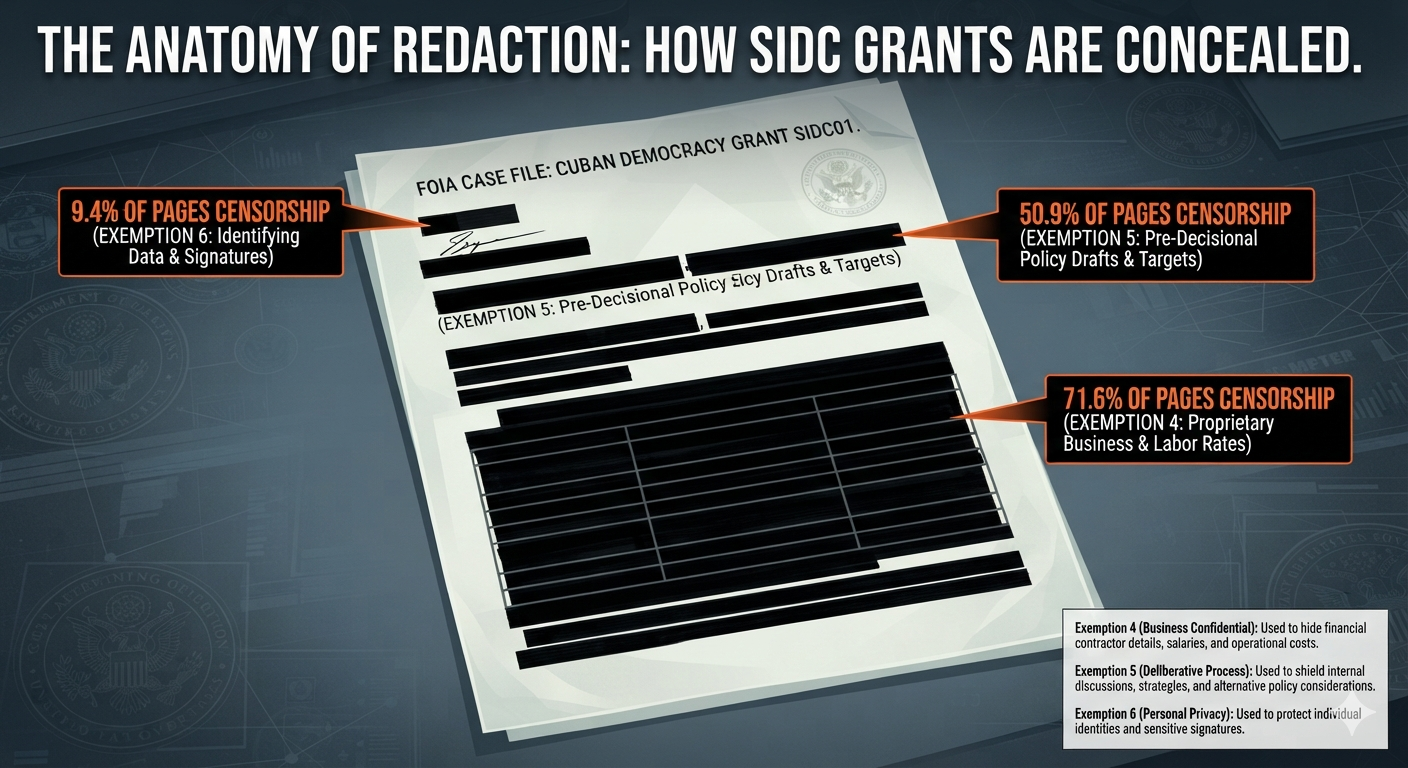
- Risk-Averse Censorship: Reviewers painstakingly cross-referenced every single line of the 53 pages against three rigorous legal exemptions, utilizing FOIA Exemption 4 (proprietary business data), Exemption 5 (deliberative process drafts), and Exemption 6 (personal privacy signatures). The resulting math is staggering: over 75% of the pages in the packet feature heavy, black-box redactions designed to permanently blind the public from seeing the exact technical mechanics of the operations.
Were the European NGOs named?
The specific identities of SEC and KDZ remain highly classified operational secrets. By keeping these names permanently blanked out under Exemption 4 and Exemption 5, the U.S. Department of State has successfully prevented researchers from mapping out the exact financial pipeline that connected Washington’s budget to the underground networks in Madrid and Berlin.
However, based on the broader history of U.S. democracy promotion funding in Europe during the mid-2000s, we can contextualize what kind of groups they likely were.
1. The historical nature of the groups
In Europe, these entities were rarely massive, household-name organizations. Instead, they were typically highly specialized, newly formed NGOs or local think tanks established specifically by Cuban expatriates, European human rights lawyers, or political activists. They were designed to act as a buffer—allowing the U.S. government to indirectly fund European operations without drawing immediate diplomatic protests from the host nations.
2. Known parallel organizations in Spain
We do not know if “SEC” was among them, but several parallel NGOs operating out of Spain during this exact era have entered the public record through other unredacted grants, including:
- The Spanish-Cuban Committee (Comité Hispano-Cubano): An advocacy group that focused heavily on lobbying Spanish politicians to take a tougher stance against Havana.
- The Association for the Study of the Cuban Economy (ASCE): While primarily U.S.-based, they frequently collaborated with European economic researchers to publish blueprints for how Cuba could transition into a market economy.
- Observatorio Cubano de Derechos Humanos (OCDH): Based in Madrid, this group became a major recipient of later U.S. funding to log and map human rights violations on the island.
3. Known parallel organizations in Germany and Eastern Europe
In Germany and Central Europe, democracy funding usually targeted groups with close links to the legacy of the Fall of the Berlin Wall:
- The International Committee for Democracy in Cuba (ICDC): Created in the early 2000s and championed by former Czech President Václav Havel, this network actively brought together prominent European politicians (including German lawmakers) to coordinate anti-Castro diplomacy.
- The German Marshall Fund or local party foundations: Germany has unique, state-funded political foundations (like the Konrad Adenauer Foundation). While they are fully public and independent, U.S. subgrantees frequently partnered with their peripheral human rights networks to host the “informational briefings for tourists” described in your document.
Is it safe to say that protecting the identity and operations of Freedom House’s partners in Spain and Germany was a primary reason the State Department restricted this document?
Yes, however, under the Freedom of Information Act (FOIA) and Executive Order 13526, there is a distinct legal difference between an agency simply “not wanting” to release information and having the lawful authority to withhold it. The State Department’s explicit goal was to protect these partners, and they used specific legal mechanisms to achieve it.
1. Protection of foreign operations and tactical plans
The document notes that these SEC and KDZ were brought into the SIDC project to act as “external solidarity” and advocacy hubs. If the State Department had released their unredacted tactical operational plans, organizational structures, or direct communication methods, it would have allowed Cuban counter-intelligence to disrupt their campaigns, track their networks, or block their outreach to international audiences and tourists.
2. Legal reliance on Exemption 4 (proprietary data)
The cover letters state that 38 pages were redacted under Exemption 4, which protects confidential commercial and financial information. The timeline page explicitly lists the European operations as “Advocacy in Europe – subgrants (SEC, KDZ)”. Because these subgrants represent private, proprietary financial agreements between Freedom House and third-party European entities, the government is legally required to withhold those line items to protect the business privacy of the non-profit organizations.
3. Legal reliance on Exemption 5 (Deliberative process)
The agency applied Exemption 5 to 27 pages to shield pre-decisional discussions and strategic evaluations regarding how these European partnerships were established and measured. By redacting these goals and tactical metrics, the State Department ensured that the diplomatic strategies used to coordinate external pressure on the Cuban government from Europe remained confidential.
Was the CIA involved in this project?
There is no evidence of direct CIA involvement in this specific 2005–2007 Freedom House program.
Historically, the CIA heavily managed operations against Cuba during the 1960s through 1980s (such as the Bay of Pigs, Operation Mongoose, and covert propaganda funding). However, by the 1990s and 2000s, these civilian-focused democracy programs were intentionally moved into the hands of public civilian agencies like the State Department and USAID.
While critics—including the Cuban government—frequently label all U.S. democracy programs as “CIA fronts” or “covert psychological warfare,” there is a distinct legal and operational difference:
- Covert Action (CIA): Designed to ensure the hand of the U.S. government is completely hidden and deniable.
- Overt Democracy Assistance (State/USAID): Publicly acknowledged by the U.S. budget. The funding source is completely transparent, even if the identities of the end-recipients are kept secret for their own safety.
Ultimately, your documents capture the Bureau of Democracy, Human Rights, and Labor (DRL) acting as a modern, civil arm of foreign policy, attempting to project “soft power” by using underground art, youth subcultures, and international peer networks to organically erode the Cuban state’s monopoly on power.
What was SIDC’s long-term objective?
Thegoals, though heavily redacted in the specific summary lists of the document, can be reconstructed from the unredacted programmatic descriptions across the text.
The initiative was designed around four core long-term strategic goals:
- Sustaining civic intensity: To maintain and scale up the frequency, nature, and visibility of pro-democracy initiatives on the island during critical windows of political uncertainty.
- Empowering the post-revolution generation: To capitalize on growing social tensions among marginalized youth by backing independent cultural, artistic, and musical expressions that bypass state censorship.
- Building dissident leadership and strategy: To transform fragmented opposition factions into structured pro-democracy organizations by introducing professional standards, strategic non-violent tactics, and public relations protocols.
- Mobilizing external international solidarity: To foster global awareness and protection for the democracy movement by securing media attention and building advocacy networks through foreign partners in Europe and Latin America.
How would you evaluate the program?
The SIDC program was tactically excellent but strategically flawed. Freedom House demonstrated superb institutional capacity in managing high-risk operations, protecting participants, and modernizing youth outreach. However, it underestimated the resilience of the Cuban state and overestimated the ability of foreign aid to force a political transition in a closed society.
What was the impact of SIDC and other 2000s-era Cuba programs?
The assertion that the programs directly caused or triggered the historic July 11, 2021, protests or the birth of the San Isidro Movement is a matter of intense debate. There is no definitive, non-partisan causal evidence proving that one led to the other.
Perspective 1: The causal argument (The Cuban government’s view)
The Cuban government and state media outlets explicitly argue a direct cause-and-effect relationship. They view modern artist-led movements as the successful culmination of the Track II strategy outlined in the 2005–2007 Freedom House documents.
- The narrative: Havana argues that by pouring millions of dollars into alternative cultural networks over two decades, agencies like USAID and the National Endowment for Democracy are trying to engineer a “soft coup”.
- The evidence: They frequently point to documented historic precedents. For example, in 2014, an Associated Press investigation revealed a secret USAID program that actively infiltrated the Cuban hip-hop scene in the late 2000s, attempting to co-opt local rappers to build an anti-government youth movement.
- The modern link: When independent artists wrote the viral anti-government anthem “Patria y Vida”—which became the rallying cry for the July 11, 2021, protests—and when the San Isidro Movement organized, the Cuban government pointed to the $20 million annual U.S. budget for Cuba democracy programs as proof that these movements were being orchestrated by Washington.
Perspective 2: The analytical challenge (The Cuba Money Project)
Journalists who tightly track this money, such as Tracey Eaton of the Cuba Money Project, emphasize that connecting specific modern dissident groups directly to U.S. government funds is notoriously difficult due to pervasive secrecy.
- Eaton notes that while it is an empirical fact that the U.S. government continuously funds programs aimed at supporting independent civil society, youth, and alternative media, the subgrant recipients are almost always redacted.
- Therefore, while the ideological strategy of targeting the hip-hop and art scene remains identical between 2005 and 2021, a direct financial pipeline connecting Freedom House’s 2007 funding to the specific founders of the 2018 San Isidro Movement cannot be verified on the public record.
Perspective 3: Organic resistance (the artists’ view)
Human rights organizations like Freedom House and the founders of the San Isidro Movement itself strongly reject the idea that their resistance was triggered by Washington. They maintain that their movement was entirely endogenous, organic, and reactive to domestic oppression.
- The catalyst for MSI: The San Isidro Movement formed organically in 2018 as a direct response to Decree 349, a law passed by the Cuban government that criminalized all independent, non-state-sanctioned artistic creation. The artists argue they took to the streets to protect their basic right to paint, sing, and speak—not because of foreign aid.
- The catalyst for July 11: Mainstream academic consensus indicates that the massive 2021 protests were triggered by an acute internal crisis, not external funding. The spark was a devastating domestic economic collapse, widespread electricity blackouts, severe food and medicine shortages, and frustration over the government’s management of the COVID-19 pandemic.
Was this document unclassified as a result of Executive Order 13526?
Yes. As noted directly in the final sentence of your FOIA cover letter, the U.S. Department of State formally verified that “all excisions are pursuant to Executive Order 13526.”
It impacted this specific document collection in several key ways:
1. The Legal Authority to Release the Records
Under E.O. 13526, no information can remain classified indefinitely. The order creates structural mandates—including Automatic Declassification deadlines and Mandatory Declassification Review (MDR) channels—that force federal agencies to pull old, restricted files out of their secure archives and review them for public release when a formal request is made. Because your request was processed years after the 2005–2007 grant period, E.O. 13526 provided the legal mechanism that forced the State Department to lift its internal security hold and change the packet’s status to “UNCLASSIFIED.”
2. Legal justification for the “excisions” (redactions)
Even when a document is cleared for declassification, E.O. 13526 dictates that an agency cannot execute a blanket release if doing so would harm national defense, compromise intelligence channels, or violate federal privacy laws. The Executive Order works in tandem with the Freedom of Information Act (FOIA) to map out exactly what must be blacked out. In your case, it governed the application of the three exemptions utilized to scrub your paperwork:
- Exemption 4 ((b)(4)): Invoked on 38 pages to keep Freedom House’s proprietary corporate finances, negotiated indirect percentages, and bidding rates hidden.
- Exemption 5 ((b)(5)): Invoked on 27 pages to legally block out the State Department’s internal deliberative drafts, pre-decisional policy notes, and strategy indicators.
- Exemption 6 ((b)(6)): Invoked on 5 pages to entirely wipe away personal privacy details, including signatures, initials, and phone numbers.
3. The 2026 stamped header markings
The handwritten and stamped markings you see at the top of the actual grant pages—which state “UNCLASSIFIED” along with a 6/3/2026 date stamp—are the exact standardized tracking marks required by the Information Security Oversight Office (ISOO) under the provisions of E.O. 13526. These stamps provide permanent, auditable proof that a certified government reviewer systematically stripped away the document’s restrictions.
Who was responsible for Executive Order 13526?
Executive Order 13526 was signed by President Barack Obama on December 29, 2009. It went into official effect shortly thereafter on June 27, 2010, but it did not solve the deep administrative bottlenecks that cause the State Department to take nearly 15 years to release files.