

Work is progressing on the Volcán Visitor Center and Central Park, a $7.69 million project that has been plagued by delays and contractual irregularities (Vea artículo en español aquí).
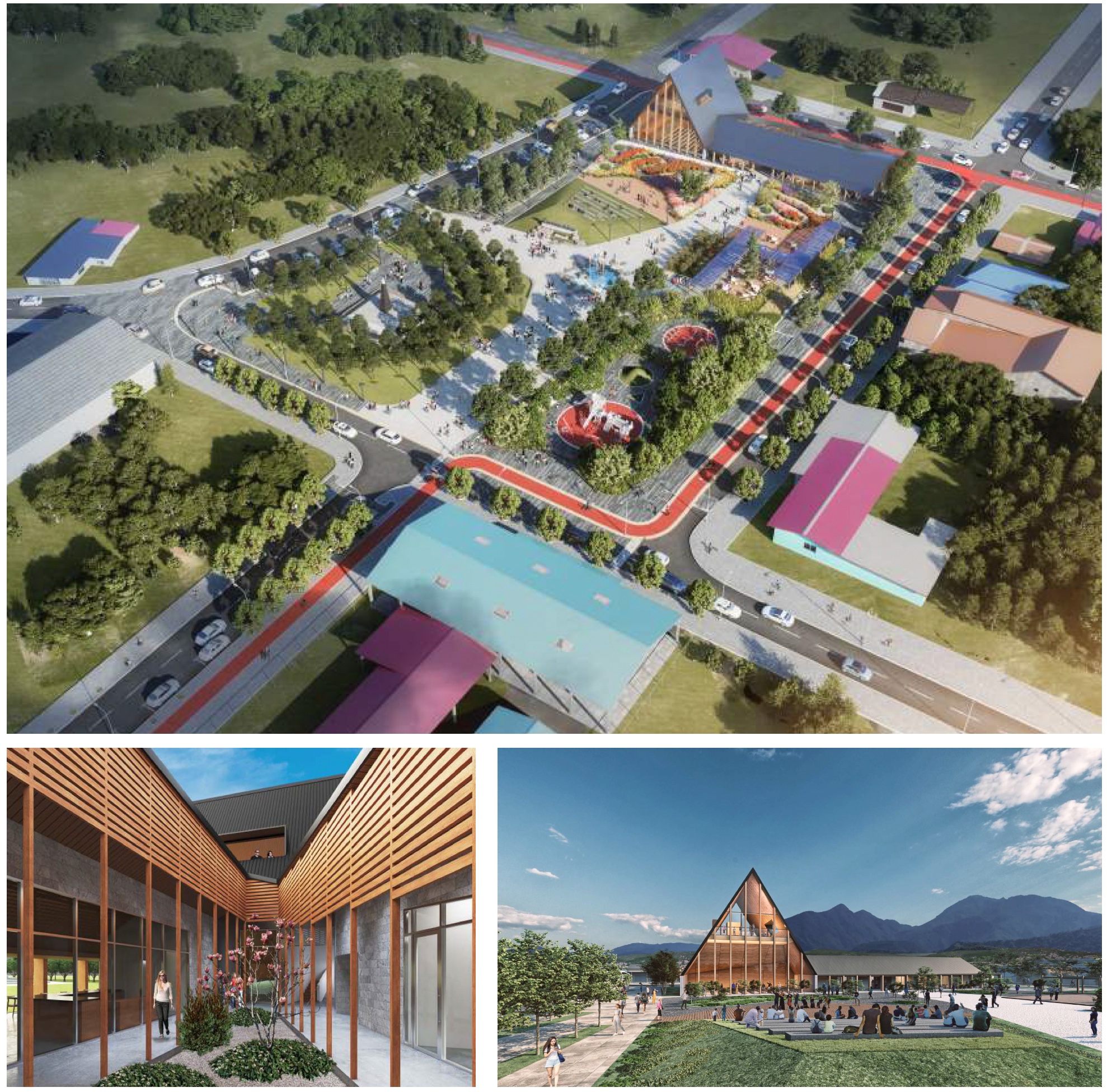
The ambitious initiative – backed by the Panama Tourism Authority and co-financed by the Inter-American Development Bank – will feature a high-end visitor center, museum and viewing platform, along with landscaped gardens, a children’s playground and bike paths.
Heavy machinery and earthmoving crews were active at the construction site this week. A highly rated firm, Servicios TG y Asociados, S.A., assumed control of the 12,700-square-meter project earlier this year. The company has a solid reputation, but inherited an aggressive, nearly impossible timeline.
Under an updated schedule, the project lifespan was extended by 195 calendar days, increasing to 975 days – 735 days for construction, 180 days for maintenance, and 60 days for closeout, public records show.
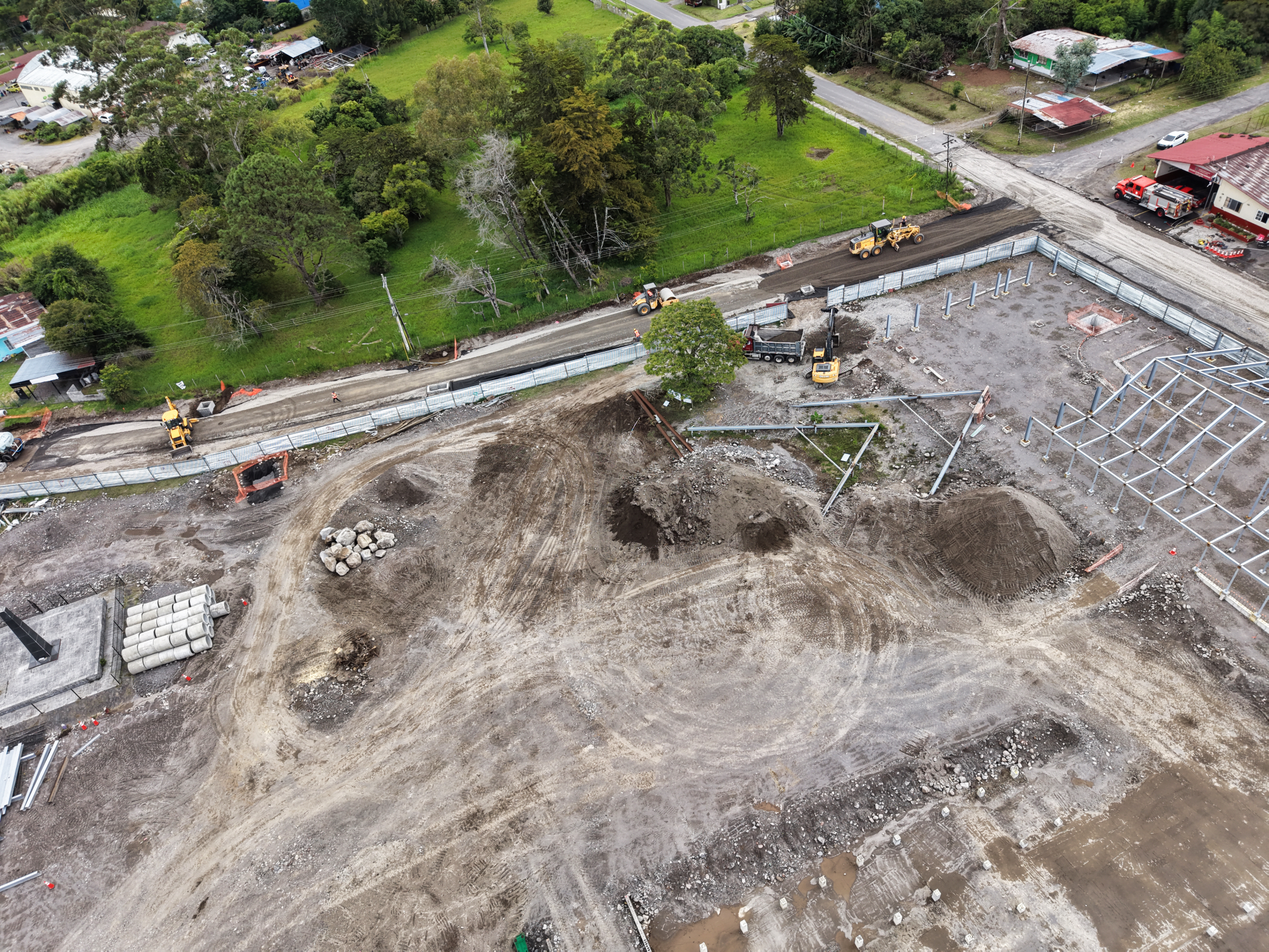
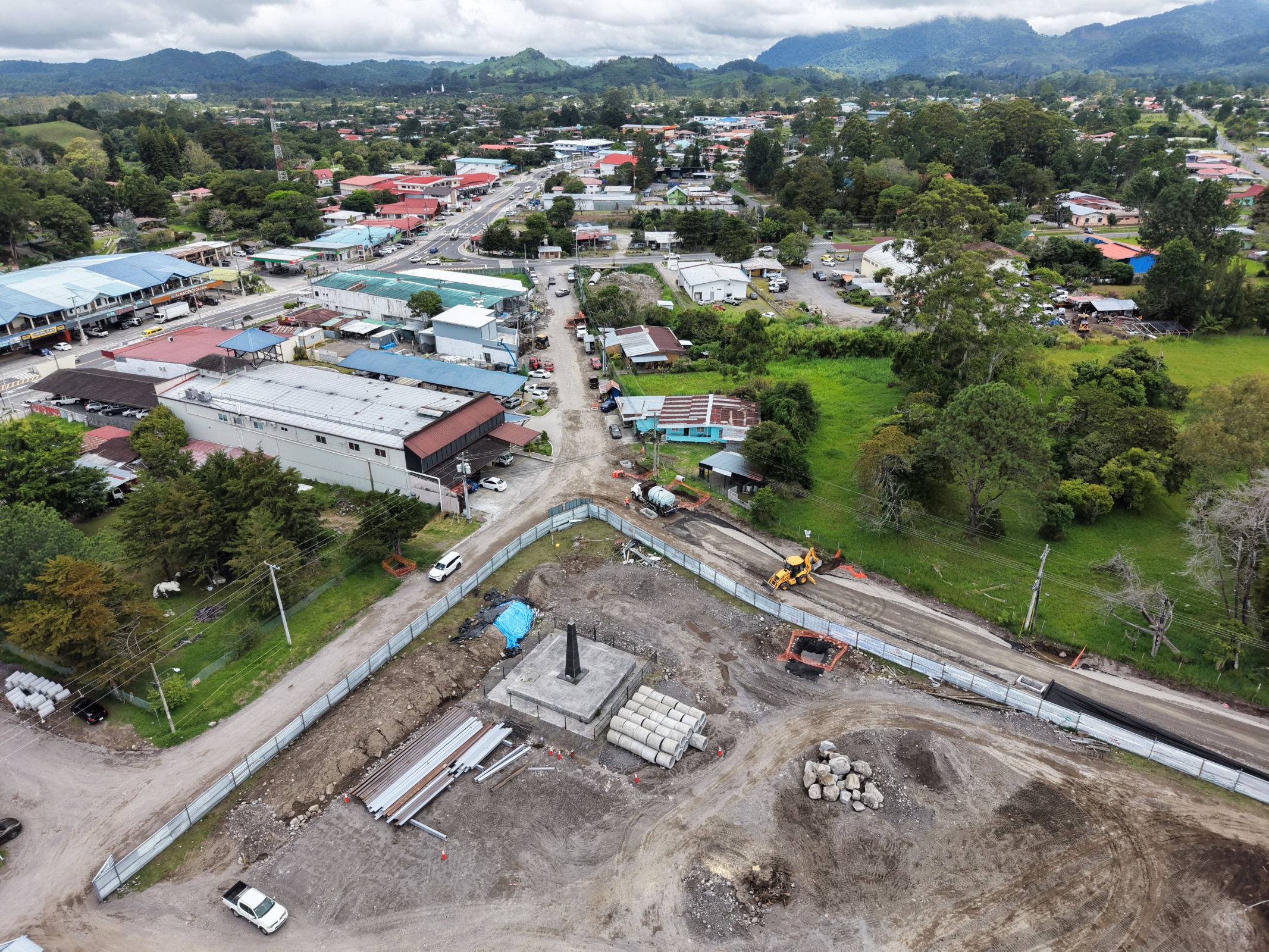
The construction deadline is now July 1, 2026. But drone photography reveals that the site remains stuck in its early-to-mid structural phases:
- The main Visitor Center building stands as an open skeleton of bare metallic roof trusses. No concrete block walls, internal partitions, or window installations are visible.
- The foreground foundation slab remains bare concrete with exposed vertical steel connections. Stacked metallic framing materials are still sitting on the dirt ground waiting to be erected.
- The surrounding grounds are still unpaved dirt and uncompacted earth. The 5,942-square-meters of recreational park zones and landscaped gardens are non-existent. Heavy excavation machinery is still actively moving soil inside the perimeter rather than laying down final pavements, sidewalks, or landscaping blocks.
The construction window will almost certainly be missed. What follows is the 180-day “maintenance phase,” reserved for fixing minor cosmetic defects on completed buildings.
Servicios TG y Asociados, which specializes in heavy structural engineering and post-tensioned concrete foundations, will need to formally secure a schedule extension. That would be justified given extensive administrative delays and the previous contractor’s lack of progress.
(Note: This article is based primarily on public documents found on the government’s PanamaCompra website, along with analysis by Gemini, Google’s AI tool. You may download project documents here. Please add comments to provide additional information, corrections or clarifications).
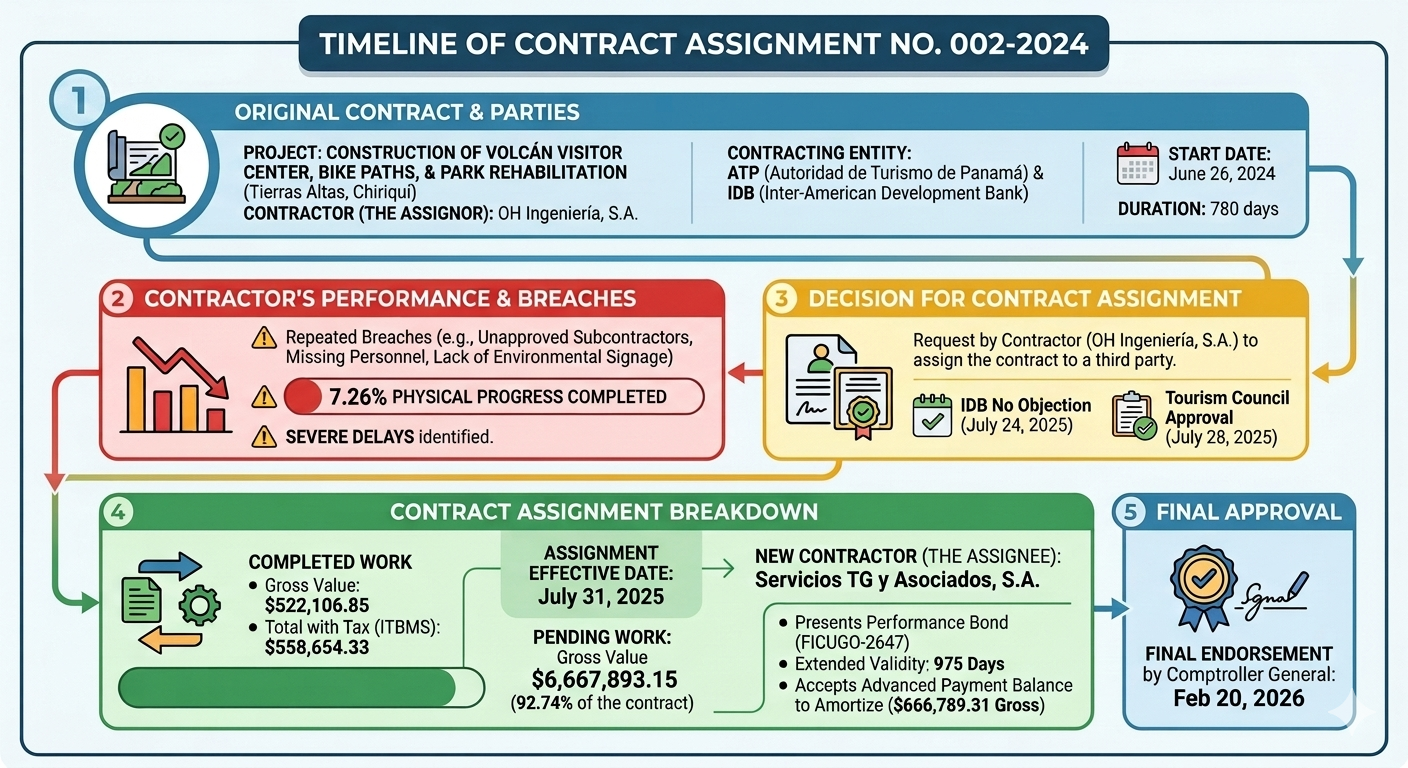
 The project was initially awarded in June 2023 to a firm called OH Ingeniería, S.A. The government gave the company a 10% upfront cash advance to get crews mobilized and materials secured on-site.
The project soon stalled. After holding the contract for over a year, OH Ingeniería managed just 7.26% physical progress, leaving the construction site largely paralyzed.
Government inspectors logged numerous contractual irregularities, accusing the firm of:
- Environmental Violations: Starting heavy excavation without mandatory environmental information sign, resulting in sanctions from Panama’s Ministry of Environment.
- Unauthorized Subcontracting: Keeping unvetted third-party crews on-site without mandatory Tourism Authority approval.
- Staffing Shortfalls: Failing to deploy the key certified engineers and technical directors promised in their winning proposal.
- Financial Irregularities: Failing to provide clear financial ledgers to prove how the 10% upfront cash advance was spent.
 Because the project switched hands mid-stream, the remaining funds had to be shifted around and realigned:
- The Upfront Cash: OH Ingeniería received a cash advance of $769,330. The government acknowledged it did work worth $558,654.33. The firm paid back $55,865.44 out of its earnings.
- The Inherited Debt: That left $713,464.56 of unearned advance money still outstanding. Because the first contractor didn’t finish the work to earn this money, the new contractor took on this $713k balance as a debt. The new contractor must pay it back to the government through future work milestones.
- What is left to do: The new contractor is now responsible for completing the remaining 92.74% of the project, which has a remaining budget value of $6,667,893.15. They must do it for the exact same cost and timeline originally agreed upon.
 The contract was voluntarily transferred to Servicios TG y Asociados in August 2025. The company couldn’t start work right away because the Comptroller General of Panama didn’t sign off until February 20, 2026.
That means the contractor has had just 120 calendar days for work on the ground, and that’s very little time considering the project’s sophistication and complexity.
 The project’s features include:
- The Visitor Center: The site’s crown jewel, a 1,008-square-meter facility designed in a creative alliance with Panama’s famous Biomuseo. The building will feature interactive exhibit halls showcasing the unique microclimates of the Chiriquí Highlands, a specialized audiovisual theater, a community amphitheater, commercial spaces, and an administrative hub.
- Upper Level Mirador: A 190-square-meter specialized viewpoint platform built with a structural steel metal deck floor system.
- Recreational Park footprint: An 8,641-square-meter zone incorporating youth zones, children’s playgrounds, a water fountain, and a restored “Los Caídos” monument, honoring members of the Panameñista Party who died fighting for democracy.
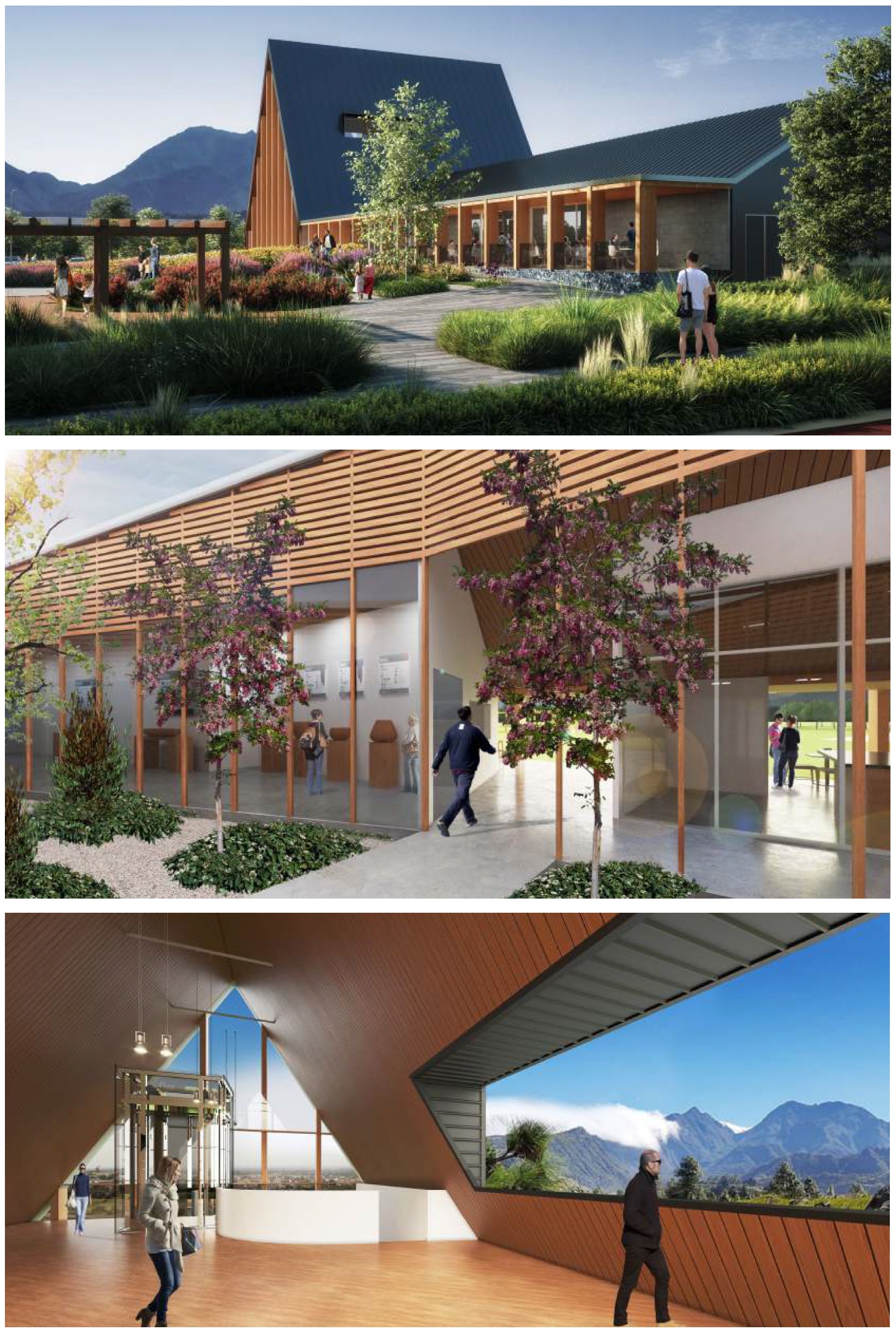 Based on the official project documents, the high-end project also includes several specialized design elements, eco-friendly engineering choices, and community-focused features:
🌿 Advanced Green Engineering & Water Conservation
- Micro-Generation Solar Canopy: The park features an architectural wood pergola flanked by a photovoltaic canopy made of 14 mm thick monolithic low-transparency solar glass. This system captures clean energy and routes it directly into a localized lithium energy battery bank for sustainable power storage.
- Dual-Source Rainwater Harvesting: To prioritize sustainability, the park’s irrigation system doesn’t rely solely on municipal lines. Instead, it uses a 1.5 HP electric pump to draw from a large, cast-in-place subterranean concrete holding tank that captures and stores local rainwater runoff.
- On-Site Ecological Protection: To preserve the surrounding park ecology, the project features its own subterranean Compact Wastewater Treatment Plant to process sanitary waste safely on-site.
🏛 Modern Architecture & Premium Finishes
- High-End Public Amenities: Rather than standard park facilities, the Visitor Center integrates a 150-person multiuse auditorium, dedicated commercial shopping spaces, and a specialized upper-level viewpoint platform built with double-height volumes and structural steel metal deck flooring.
- Acoustics and Natural Aesthetics: High-volume public zones use custom, anti-microbially treated self-cleaning ceiling systems and premium Hunter Douglas “Woodlines” natural oak-finished composite paneling. Public restrooms are upscale, finished with large-format grey natural basalt stone slabs with tight 1 mm grout joints.
🚶 Multi-Modal Urban Mobility & Safety
- Complete Street Rehabilitation: The project completely overhauls five surrounding municipal roads to fit a 20-meter public right-of-way. It integrates dedicated bicycle lanes flanked by safety bollards, texturized stamped concrete pedestrian walkways, tree wells, and 98 parking stalls.
- Traffic Calming Intersections: The project introduces a “Pompeyano”—a highly engineered, structurally reinforced raised crosswalk designed to control incoming vehicle speeds while keeping pedestrian paths completely flush with adjoining walkways.
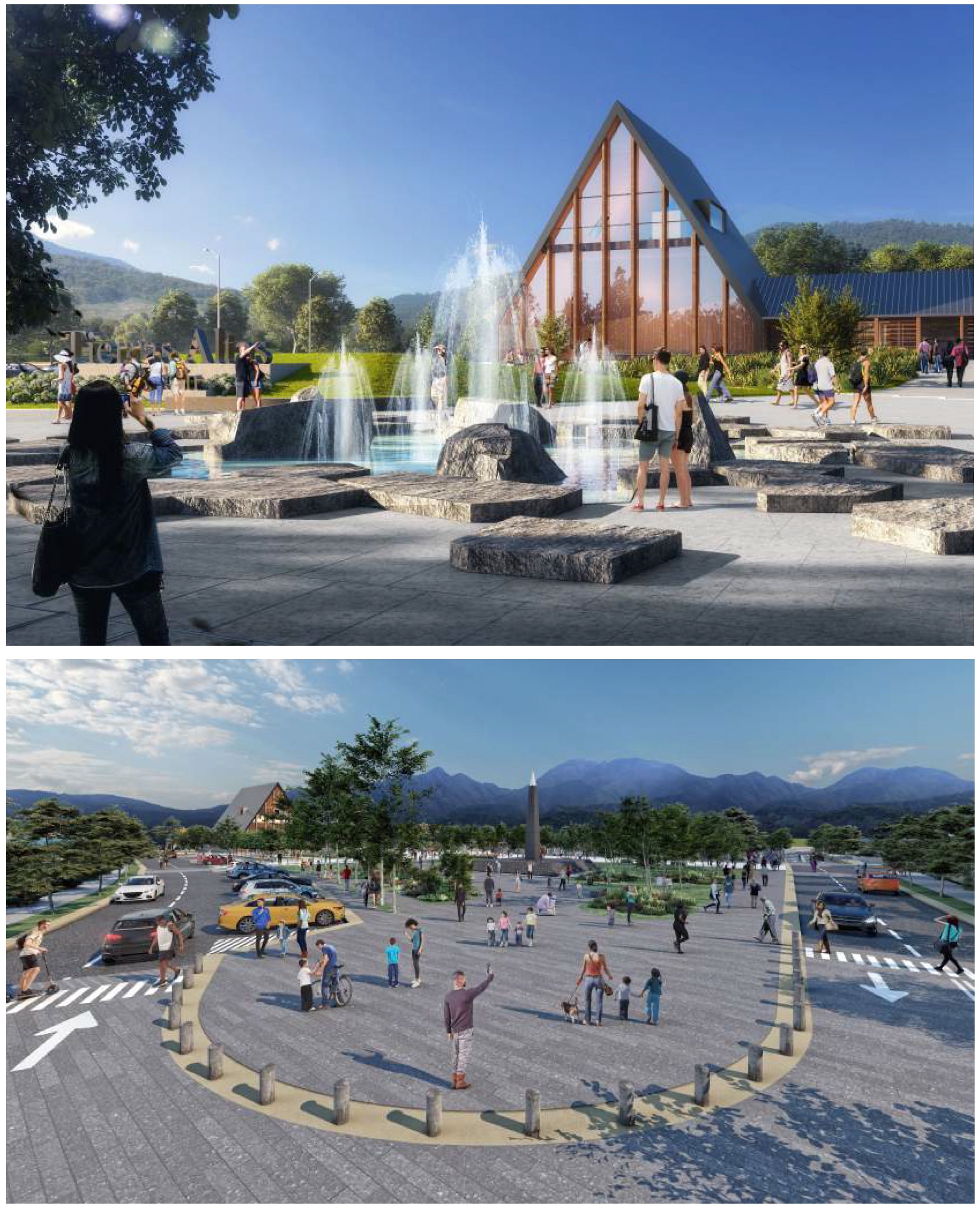 The Panama Tourism Authority and the Inter-American Development Bank are investing in Tierras Altas for strategic reasons. Their goals include:
- Creating a Basecamp for Baru Volcano National Park: The town of Volcán serves as the primary technical entry point for the challenging Los Llanos trail up the Barú Volcano – the highest point in the country. The visitor center will act as a staging facility to safety-brief hikers, register mountaineers, and provide context on the volcano’s ecosystem.
- Diverting High-Value Eco-Tourism Traffic: While neighboring Boquete historically absorbs the bulk of Chiriquí’s eco-tourism dollars, Volcán possesses unmatched natural assets like the Chiriquí Viejo rafting rivers and world-class bird-watching paths.
- Fostering Community Entrepreneurship: The center acts as a direct economic anchor for the local population. It gives local coffee farmers, orchid growers, and artisan weavers a centralized, high-visibility platform to sell their goods directly to travelers.
- Upgrading Core Municipal Livability: By combining tourism infrastructure with practical urban improvements (like robust concrete street paving, security cameras, and modern public restrooms), the project is expected to elevate the quality of life and safety for the residents of Tierras Altas.
1 thought on “Inherited debt, impossible deadlines: The shaky foundations of Volcán’s visitor center”