

In the mist-shrouded highlands of Chiriquí Province, a multi-million-dollar soccer arena sits frozen in time.
The Volcán soccer stadium project, designed to be a showpiece for Panamanian sports, has instead become a monument to bureaucratic gridlock and legal wrangling. Spanning over eight years of extensions, contract pauses, and nasty accusations, the stadium is playing out its latest match not on a turf pitch, but inside the chambers of the Public Procurement Administrative Tribunal, or TACP by its Spanish initials (Vea artículo en español aquí).
The project began with high hopes on July 6, 2017, when the Panamanian Institute of Sports, or Pandeportes, requested bids for high-performance athletic and soccer complex.
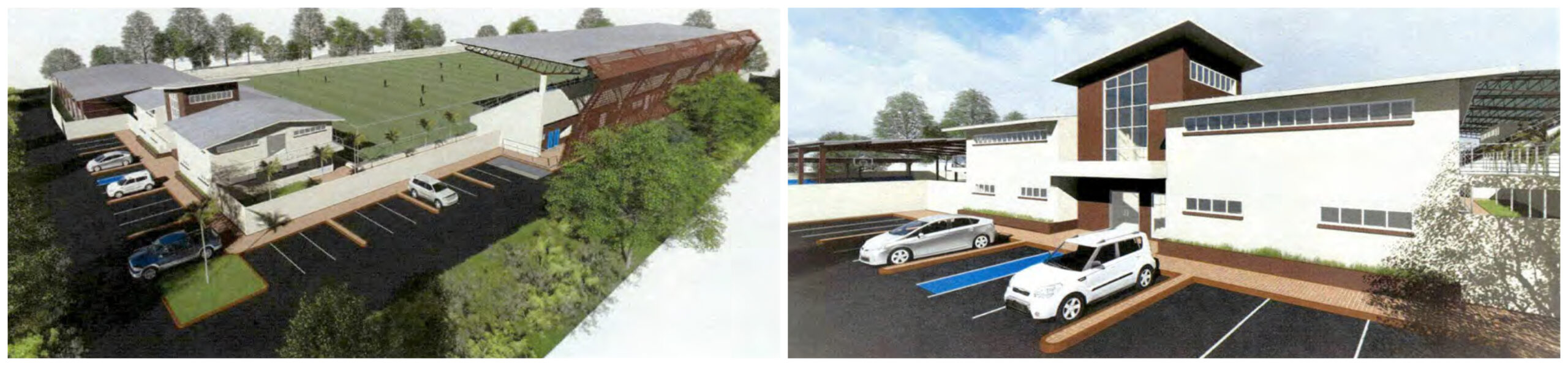 The contract was awarded to the Consorcio Estadio de Volcán for $3,471,040.04 with a strict 14-month timeline.
Instead, a perfect storm of political and bureaucratic shifts turned the 14-month contract into a 98-month marathon. First, the government took 11 months just to issue an order to proceed, meaning the original material quotes expired before a single shovelful of dirt was moved.
Then came the design overhauls. In 2019, municipal authorities approved transforming part of the building into an athlete gymnasium. But by early 2020, a changing Pandeportes administration ordered the designs reversed simply because they disagreed with the prior administration’s decisions, forcing the contractor to redesign the complex all over again at his own expense.
Add to this an 28-month freeze without any government budget allocations between 2021 and 2025, and the project ground to a halt.
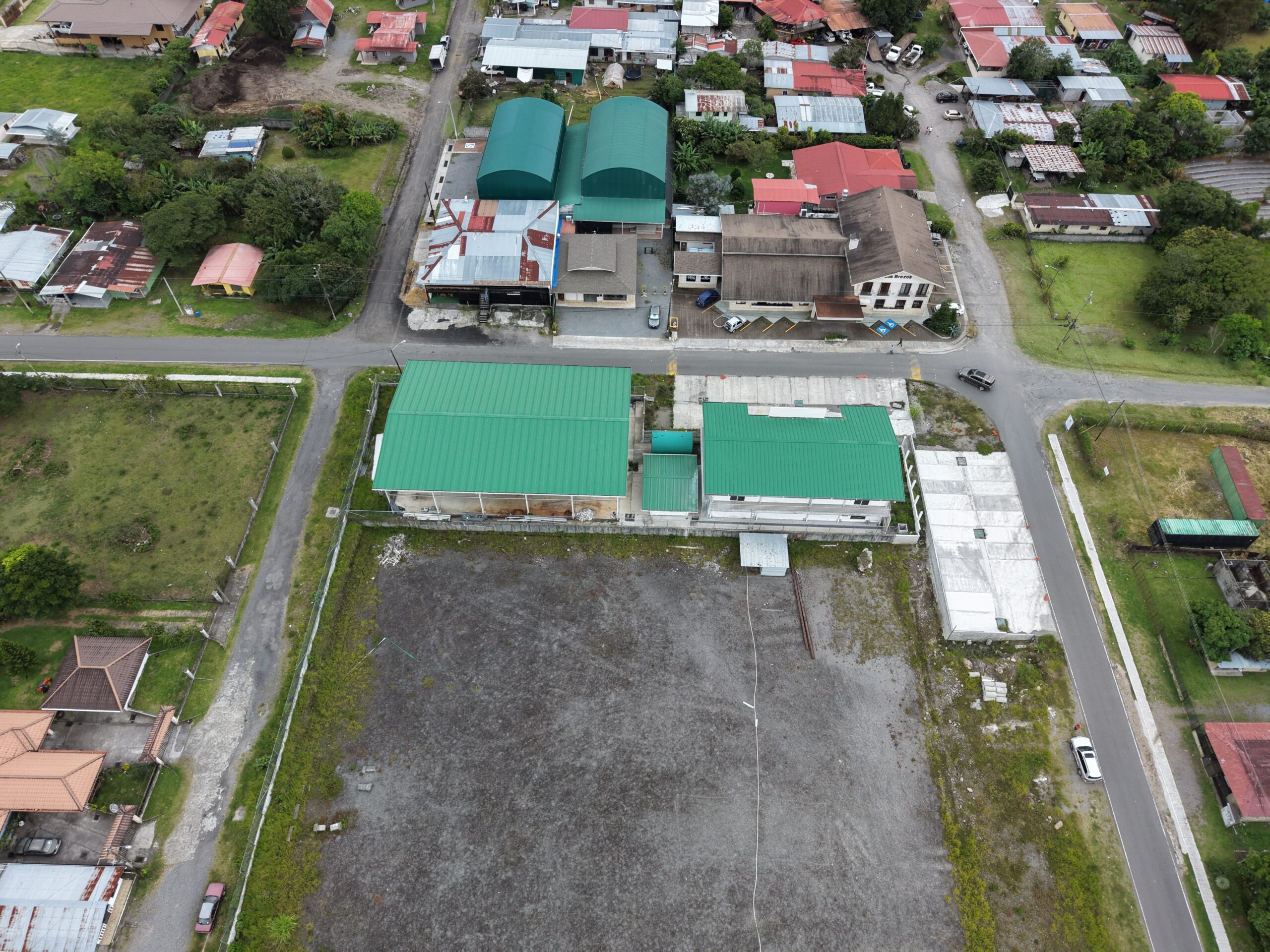
Because the site has been completely paralyzed since October 24, 2025, the unfinished elements are fighting a losing battle against Volcán’s notorious mountain weather.
The technical inspection reports read like a sports tragedy:
- Turf in Exile: 100% of the premium, imported FIFA-compliant synthetic turf was successfully brought into Panama in 2021. It is currently in storage, ticking up maintenance costs because the pitch grounds are not ready for installation.
- Contaminated Grounds: The exposed gravel base of the pitch, left unprotected against heavy highland downpours, has become heavily contaminated with fine mountain silt, destroying its specialized drainage properties.
- Skeletons in the Mist: The structural steel framing and bare concrete slabs for the athlete complex sit exposed to the harsh sun and humidity, causing deterioration.
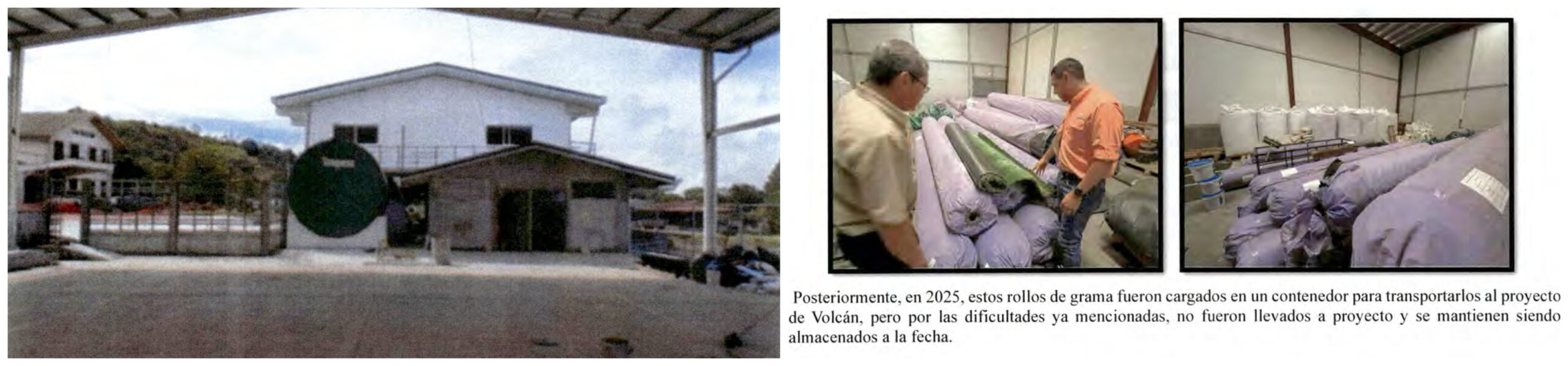 Pandeportes claimed the lead resident engineer abandoned the site, but the contractor hit back with proof that his authenticated signature is on every single invoice approved by government inspectors, explaining his physical presence was only temporarily paused as a cost-cutting measure while the two sides argued over finances.
On April 8, 2026, Pandeportes Director General Miguel Ángel Ordóñez Paredes issued Resolution No. 094 D.G., administratively terminating the contract for poor performance and slapping the contractor with a three-year ban from public bidding.
The contractor swiftly appealed, exposing an administrative blunder: Pandeportes had mistakenly leveled the multi-year government bidding ban against corporate entities that had been legally disassociated from the project years prior, rather than the actual active consortium partners.
The contractor also pointed out a financial math problem. Due to the processing delays, a series of time extensions were granted—but 94% of that extended time was entirely consumed by the government’s own bureaucratic lagging, rendering the extensions completely “illusory.” For example, the government took so long to sign Amendment No. 2 that the extension had technically expired 145 days before the paperwork was even signed.
The Volcán stadium is more than a localized legal squabble. It’s a case study in public accountability. An estimated population of 5,000 local athletes and residents has been deprived of a sports complex promised in 2017.
The stakes are high. Internal assessments warn that if the government tears up the contract and puts the remaining work out for a fresh bid, it will trigger an inflationary budget expansion exceeding $8,000,000.
A faint glimmer of hope remains. In May and June of 2026, both parties agreed to a statutory joint process suspension to temporarily hold back the court battle. They have been engaged in technical, financial, and legal negotiations to see if they can finalize an out-of-court agreement, potentially assigning 100% of the contract rights to a solvent third-party builder who can immediately install the turf and finish the stadium.
The 468-page administrative file is sitting with the TACP Magistrate’s Office under lead Judge Zaira Santamaría de la Torraca. The magistrates are expected to issue a final, binding judgment that will determine whether Volcán’s stadium will finally be built or abandoned to the elements.
The original contractor’s insurer, Acerta Seguros, has officially proposed to Pandeportes to execute a direct contract assignment with Constructora La Morenita, S.A., the third-party builder.
This transfer would hand 100% of the remaining stadium works over to La Morenita, which hopes to rebuild public trust after nearly a decade of disappointments and delays on the Volcán project.
 La Morenita plans to deploy a multi-layered regional rehabilitation strategy centered on strict operational auditing, hyper-local workforce integration, and digital timeline transparency.
Knowing that the community is cynical of more political promises, the firm’s strategy—outlined in the technical proposals submitted to the TACP—rests on five pillars:
1. The Immediate “Field Remobilization” Milestone
- Visible Machinery Handoff: Rather than beginning behind closed doors, La Morenita will initiate a public site cleanup event within the first 5 calendar days of final Comptroller endorsement.
- Remediation Phase: The firm will instantly deploy heavy excavation gear to perform a highly visible, top-layer removal of the contaminated, mud-clogged pitch base to demonstrate immediate progress to the community.
2. Implementation of a Live “Transparency Portal”
- Real-Time Webcam Feeds: To combat the history of administrative silence, the firm intends to place high-definition streaming cameras at the site bounds.
- Progress Tracking: Local residents can log in online at any hour to verify active labor counts, concrete truck pourings, and the progression of the High-Performance Complex block walls.
- Milestone Logs: The firm will host a public digital repository publishing every signed site inspection report issued by Pandeportes engineer Maria Laura Masoliver.
3. Hyper-Local Subcontracting and Union Alliances
- Chiricano Staffing Mandate: La Morenita plans to hire 100% of its manual labor and masonry squads directly from the Bugaba and Tierras Altas districts.
- CAPAC-SUNTRACS Synchronization: By directly syncing job openings with the local regional branches of the construction labor unions, the company aims to turn the stadium into an active engine for local employment, ensuring that the community shares in the economic rebalancing.
4. Engaging Youth Sports Leagues
- The “Turf Verification” Day: To repair the trust of fractured youth soccer leagues, the firm intends to host an open site day where local community coaches can physically inspect the premium, container-stored GreenFields synthetic turf rolls.
- Technical Briefing: La Morenita’s chief engineers will walk sports organizations through the specific elastic infill layout blueprints to assure youth athletes that the new field will meet genuine FIFA safety guidelines.
5. Executing Strict Fiscal Capping Protocols
- Fixed Price Settlement Guarantee: By agreeing to a compromised, flat B/. 1,200,000.00 lump-sum rebalancing fee, La Morenita is legally locking its billing cap.
- Eliminating Future Surprises: This flat rate legally guarantees the state and the local community that the builder cannot request further unexpected price increases or cost inflation adendas during the remaining 240-day construction pipeline.
Meanwhile, the contract value for the sports complex has increased to $3,662,244.45. Of that, Pandeportes has paid out $1,833,931.39. That leaves $1,828,313.06 in the contract budget that would ostensibly go to La Morenita, along with the $1.2 million lump sum.
Based on the specifications detailed in Public Tender No. 2017-1-35-0-04-LV-006789 and updated via Contract Amendment No. 2, the sports complex, if completed, will feature:
- FIFA-Compliant Synthetic Turf: High-performance GreenFields synthetic grass pitch covering a regulation area of 100 meters long by 64 meters wide.
- Perimeter Safety Padding: 144 linear meters of high-density protective wall foam padding mounted behind the goal posts to prevent player collisions with boundary wall.
- Professional Equipment: Fixed FIFA-regulation steel goal posts, weather-resistant nylon netting, specialized player and coach dugout benches and corner flag kits.
- Advanced Multi-Layer Drainage: A sub-surface matrix of perforated pipes and multi-sized crushed aggregate stones paired with heavy-duty geotextile filtration fabric.
- 800-Person Concrete Grandstands: Reinforced concrete spectator seating tiers.
- High-Performance Training Complex: A dedicated multi-room building featuring a specialized athlete gymnasium, clinical sports medicine spaces, physical therapy rooms, and administrative offices.
- Media and Security Booths: Elevated, glass-enclosed press boxes tailored for journalists and televised broadcast gear.
- Public Facilities: Public restrooms, specialized player locker rooms with shower stalls, ticket sales offices, and concession/cafeteria modules.
- 700-Lux LED Illumination Grid: A modern stadium lighting system composed of 52 high-efficiency LED luminaires.
- Steel Lighting Towers: Four heavy structural steel lattice towers anchored into reinforced concrete foundation pads around the field bounds.
- Covered Multi-Use Court: A secondary covered indoor court facility.
For nearly a decade, residents of Volcán have watched a multi-million-dollar promise decay under the harsh mountain weather.
They have seen administrations change and lawyers argue over missing files while premium FIFA-grade turf sits trapped in storage.
Later this year, residents should find out if the government will continue building the sports complex or leave it abandoned to the mist of Tierras Altas.
1 thought on “Trapped turf and legal battles: The tragic tale of Volcán’s athletic complex”