
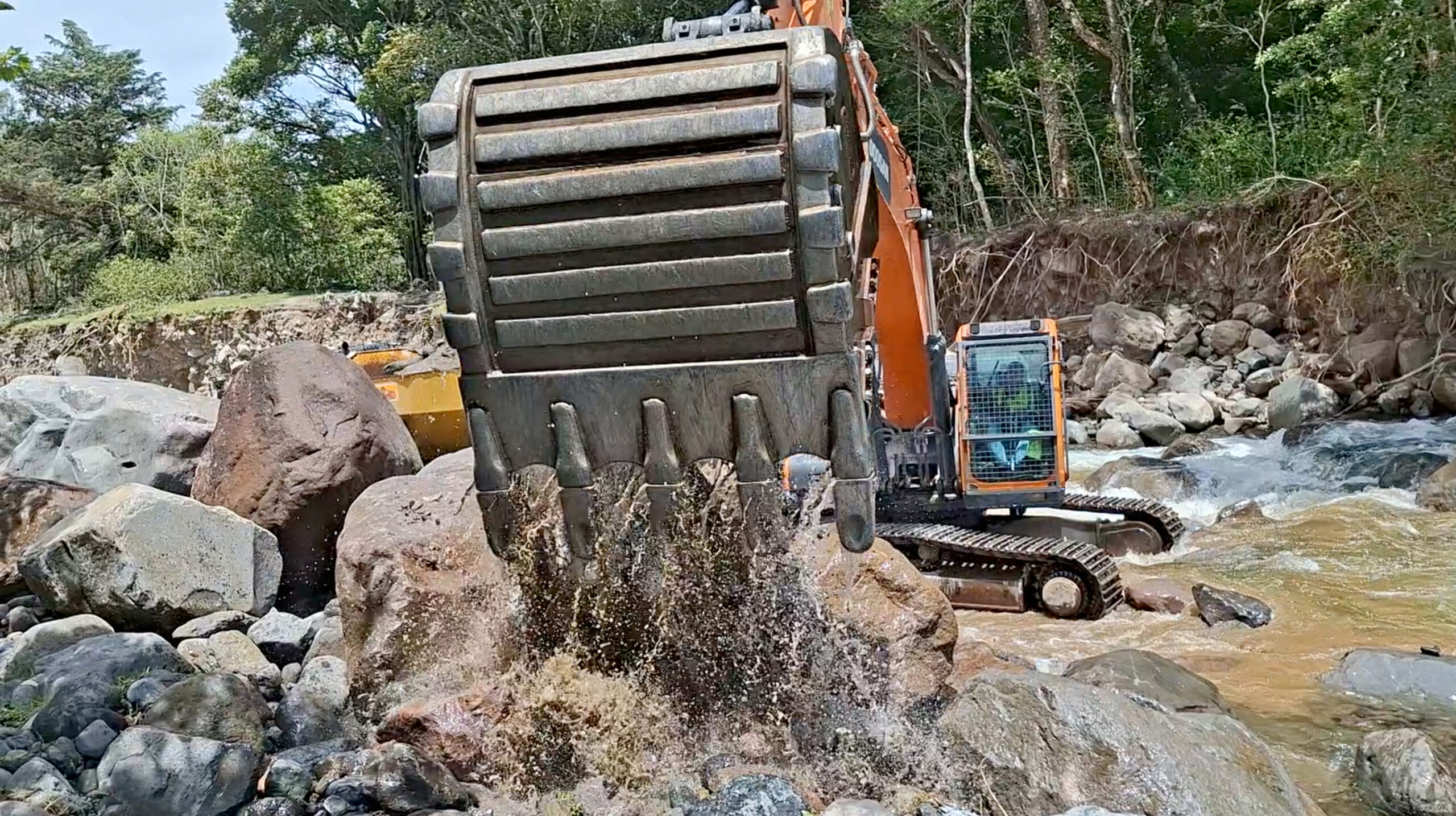
Imagine ancient stones and boulders wrapped in ribbons of thundering wild water – that’s the Chiriquí Viejo River in Panama. And workers this week have been busy destroying a section of it.
They have instructions to remove 50,000 cubic meters of rock and gravel for use in road repairs, and it’s the river – the people who live along it – who must pay the price. (Haga clic aquí para acceder a la versión en español de este artículo).
In its natural state, the Chiriquí Viejo River is a beautiful thing, starting on the slopes of the Barú Volcano and cascading 100 miles through Chiriquí Province.
On Tuesday, a heavy equipment operator ripped up an 80- to 90-meter section of the river, pushing aside huge boulders, digging holes and scooping out hundreds of tons of rocks and gravel.
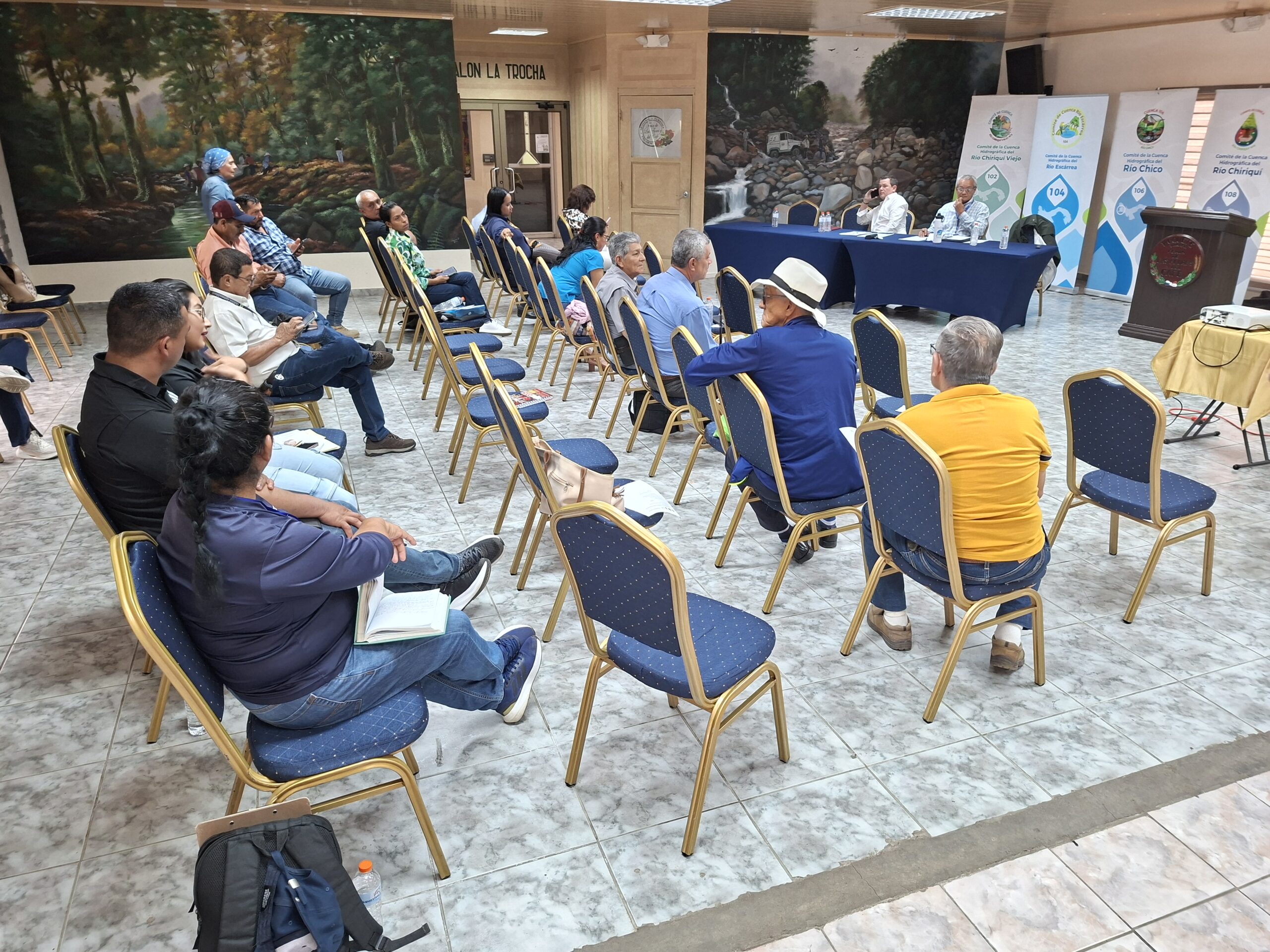
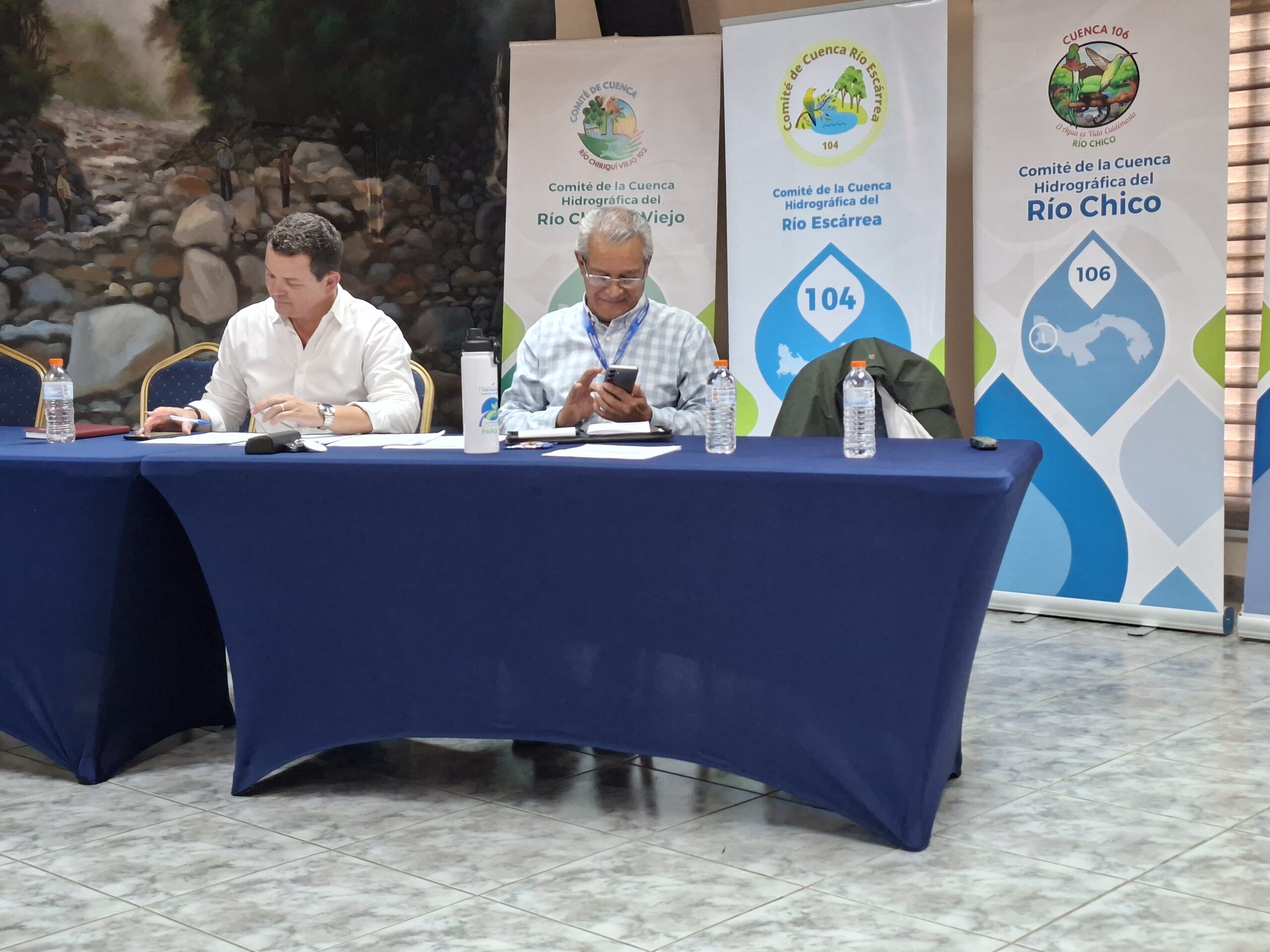
On Wednesday, the provincial River Basin Committees convened in the expat haven of Boquete and asked how it’s possible that this expansive rock and gravel-extraction project is ravaging the Chiriquí Viejo River when residents rejected a rock quarry proposal in the same spot in 2023.
“Where are the permits for work in the riverbed?” asked Damaris Sanchez, an environmental activist who sits on the committee. “What environmental impact studies have been conducted for this project? What is the objective of this work? The population is unaware of this, and we believe it’s important that the Basin Committees, as a multidisciplinary body, should have been informed of the intentions or the planned work on the river.”
“Right now, I’m here as civil society, saying that our voice also needs to be put on paper, and we’re recommending that an investigation be done, that our rivers can’t take any more. A strategic evaluation of our water sources needs to be done, and where there are places that need to be secured and protected, they must be protected above all else.”
The Chiriquí Viejo River is fragile, “a highly sensitive area,” Sanchez said, and dredging it weakens the river banks, causes erosion and increases the risk of flooding.
“The environment is for everyone. So, it seems very irresponsible to do it,” added Yolanda Yovanovich, another activist on the committees.
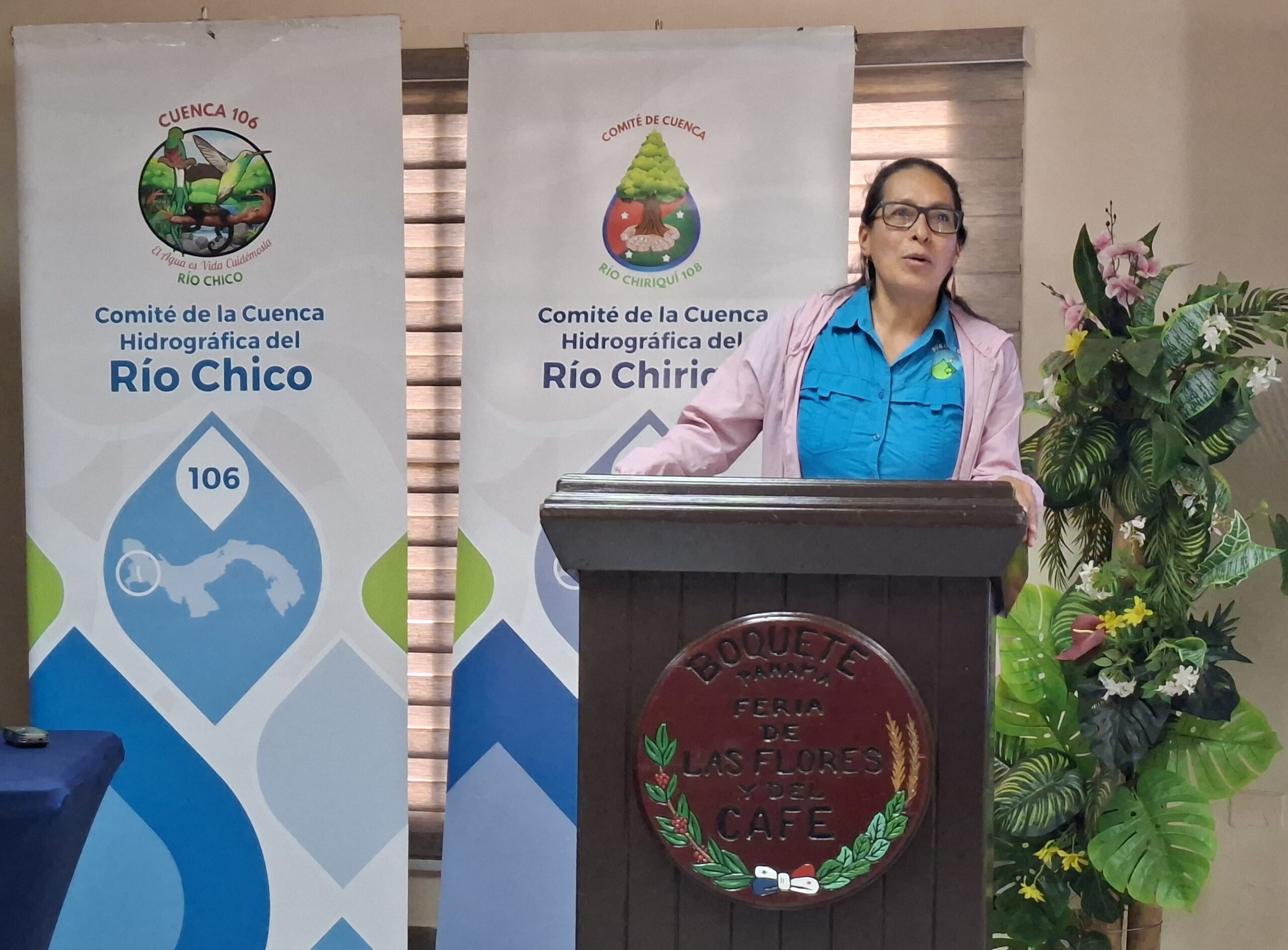
Ernesto Ponce, who chairs the Basin Committees and is also the top environmental official in Chiriquí Province, said no environmental studies were required because the project is linked to a national state of emergency that was declared in November 2024. Flooding and landslides nationwide that month killed at least 11 people, including five in Chiriquí Province.
It isn’t clear how road work is connected to the 2024 state of emergency, said Sanchez, expressing frustration that the emergency resolution “has to shine above all else.”
“It was declared in 2024, more than 15 months have passed, and that resolution is still in effect,” she said. “How long will that remain in effect?”
In any case, environmental permits are waived during such emergencies, said Ponce, regional director of the Ministry of Environment, or MiAmbiente. An environmental impact study of the area could take two years, he said, and the government didn’t want to wait.
A private company called Bagatrac is doing the Chiriquí Viejo River work, and must submit periodic status reports to the Ministry of Public Works, Ponce said.
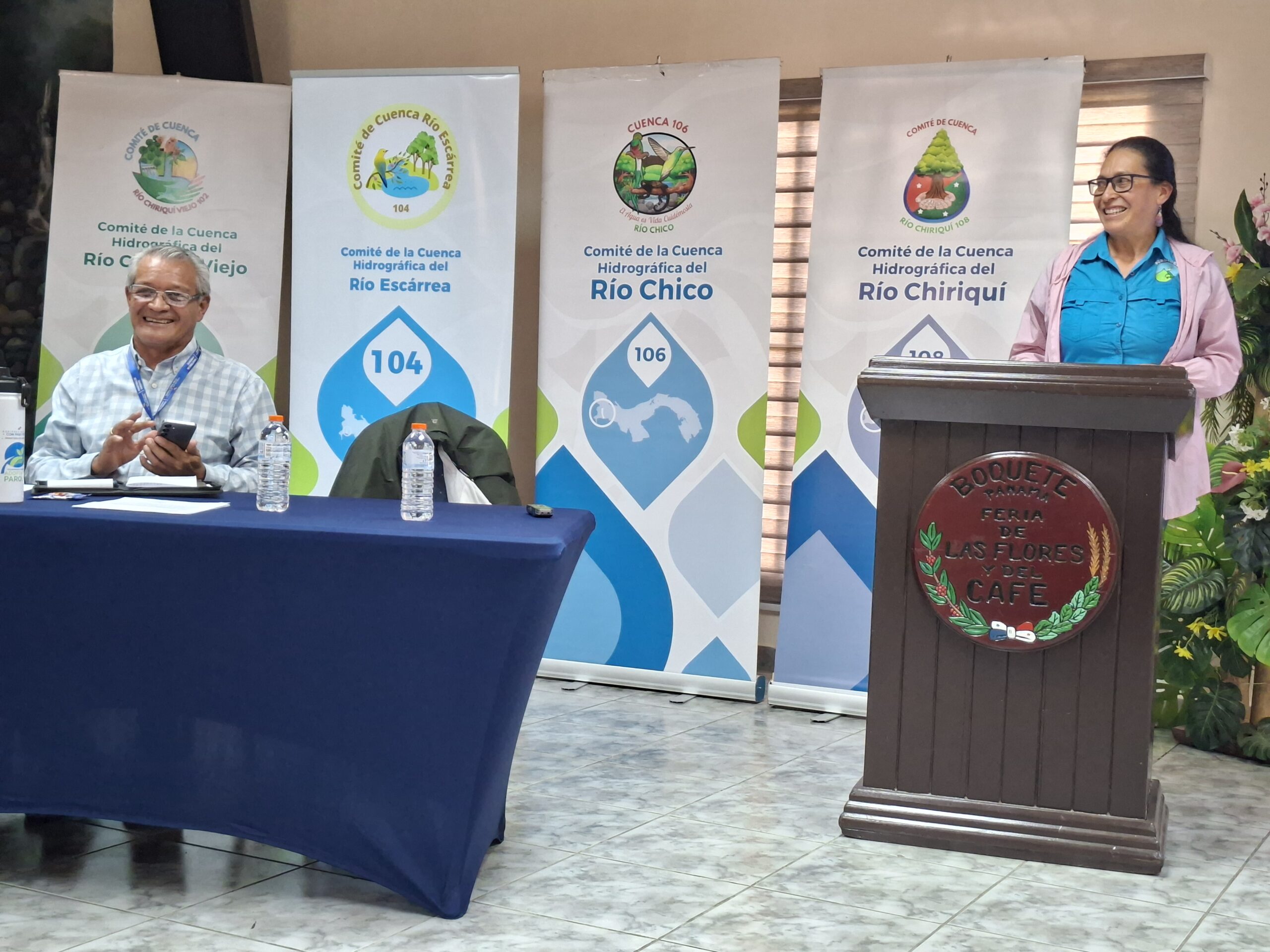
Reading from a document on his phone, Ponce said Bagatrac can extract 50,000 cubic meters of material from the river during a period lasting 540 business days, and that period can be extended. Workers have repaired six roads and have three more to go before finishing, he said.
Sanchez said, “We’re not against the company doing its job, but if its job depends on continuing to damage the river, then we don’t agree. We need to find another source of material, or we need to go further downstream.”
Where material is extracted shouldn’t depend on Bagatrac and what may appear to be the most convenient location, Sanchez said.
“It’s not where the company wants to extract,” she said. “It’s … ensuring that the river doesn’t pose a danger to the people who live there.”
She also said MiAmbiente should have authority in the matter, not the Ministry of Public Works.
Sanchez and other committee members complained about the lack of transparency regarding the project, and say there has been little chance for community involvement. Ponce agreed to organize a visit to the site of the work sometime during the last week of April.
According to Gemini, Google’s AI tool, 50,000 cubic meters of rocks and gravel is roughly 80,000 to 85,000 metric tons. That’s enough to build:
- About 20 Olympic-sized swimming pools
- 33 kilometers to 50 kilometers of a two-lane gravel road
- Up to 5,000 single-family home foundations
- A parking lot the size of 70 football fields
A Spanish-language translation by Google Translate is below:
En Español
Imaginen piedras y rocas milenarias envueltas en corrientes de agua turbulenta: así es el río Chiriquí Viejo en Panamá. Y esta semana, los trabajadores han estado destruyendo un tramo del mismo.
Tienen instrucciones de extraer 50.000 metros cúbicos de roca y grava para la reparación de carreteras, y es el río —y la gente que vive a sus orillas— quien debe pagar las consecuencias.
En su estado natural, el río Chiriquí Viejo es un espectáculo hermoso, que nace en las laderas del volcán Barú y recorre 160 kilómetros a través de la provincia de Chiriquí.
El martes, un operador de maquinaria pesada arrasó un tramo de entre 80 y 90 metros del río, apartando enormes rocas, excavando agujeros y extrayendo cientos de toneladas de rocas y grava.
El miércoles, los Comités de Cuencas Hidrográficas se reunieron en Boquete, ciudad residencial para expatriados, y cuestionaron cómo es posible que este extenso proyecto de extracción de roca y grava esté devastando el río Chiriquí Viejo, cuando los residentes rechazaron una propuesta de cantera en el mismo lugar en 2023.
“¿Dónde están los permisos para trabajar en el lecho del río?”, preguntó Damaris Sánchez, activista ambiental e integrante del comité. “¿Qué estudios de impacto ambiental se han realizado para este proyecto? ¿Cuál es el objetivo de esta obra? La población desconoce esta situación, y creemos que es fundamental que los Comités de Cuencas Hidrográficas, como organismo multidisciplinario, hayan sido informados sobre las intenciones o el trabajo planificado en el río”.
“Ahora mismo, estoy aquí como sociedad civil para decir que nuestra voz también debe quedar plasmada por escrito, y recomendamos que se realice una investigación, porque nuestros ríos no pueden soportar más. Es necesario realizar una evaluación estratégica de nuestras fuentes de agua, y donde haya lugares que necesiten protección, deben protegerse por encima de todo.”
El río Chiriquí Viejo es frágil, “una zona de alta sensibilidad”, dijo Sánchez, y su dragado debilita las riberas, provoca erosión y aumenta el riesgo de inundaciones.
“El medio ambiente es de todos. Por lo tanto, parece muy irresponsable hacerlo”, agregó Yolanda Yovanovich, otra activista de los comités.
Ernesto Ponce, presidente de los Comités de Cuencas Hidrográficas y máximo responsable ambiental de la provincia de Chiriquí, afirmó que no se requerían estudios ambientales porque el proyecto está vinculado al estado de emergencia nacional declarado en noviembre de 2024. Las inundaciones y deslizamientos de tierra que azotaron el país ese mes causaron la muerte de al menos 11 personas, cinco de ellas en la provincia de Chiriquí.
No está claro cómo se relacionan las obras viales con el estado de emergencia de 2024, dijo Sánchez, expresando su frustración porque la resolución de emergencia “debe primar sobre todo lo demás”.
“Se declaró en 2024, han pasado más de 15 meses y la resolución sigue vigente”, dijo. “¿Cuánto tiempo más permanecerá vigente?”
En cualquier caso, durante este tipo de emergencias se prescinde de los permisos ambientales, declaró Ponce, director regional del Ministerio de Medio Ambiente (MiAmbiente). Un estudio de impacto ambiental de la zona podría tardar dos años, añadió, y el gobierno no quería esperar.
Una empresa privada llamada Bagatrac está realizando las obras en el río Chiriquí Viejo y debe presentar informes periódicos de estado al Ministerio de Obras Públicas, dijo Ponce.
Leyendo un documento en su teléfono, Ponce dijo que Bagatrac puede extraer 50,000 metros cúbicos de material del río durante un período de 540 días hábiles, y que ese período puede extenderse. Según indicó, los trabajadores han reparado seis caminos y les quedan tres más para terminar.
Sánchez declaró: «No nos oponemos a que la empresa haga su trabajo, pero si este depende de seguir dañando el río, entonces no estamos de acuerdo. Necesitamos encontrar otra fuente de material o avanzar río abajo».
Sánchez afirmó que la procedencia del material no debería depender de Bagatrac ni de lo que parezca ser la ubicación más conveniente.
«No se trata de dónde quiera extraer la empresa», dijo. «Se trata de garantizar que el río no represente un peligro para las personas que viven allí».
También señaló que la autoridad competente en este asunto debería recaer en MiAmbiente, y no en el Ministerio de Obras Públicas.
Sánchez y otros miembros del comité se quejaron de la falta de transparencia respecto al proyecto y afirmaron que ha habido pocas oportunidades para la participación de la comunidad. Ponce accedió a organizar una visita al lugar de la obra durante la última semana de abril.
Según Gemini, la herramienta de IA de Google, 50 000 metros cúbicos de rocas y grava equivalen aproximadamente a entre 80 000 y 85 000 toneladas métricas. Con esa cantidad se podría construir:
- Unas 20 piscinas olímpicas
- Entre 33 y 50 kilómetros de carretera de grava de dos carriles
- Hasta 5000 cimientos para viviendas unifamiliares
- Un aparcamiento del tamaño de 70 campos de fútbol
1 thought on “Ministry of Environment sidelined as river ravaged”